Customer story
How Pushkin Industries ships hit podcasts on deadline with LucidLink
March 2026, Pushkin, Media & entertainment
4 mins
Table of contents
- Meet Pushkin
- Background
- The challenge: scaling production without breaking workflows
- The test: a low-risk pilot with Against the Rules
- LucidLink became a non-issue
- One shared source of truth for active production
- The impact: fewer fires, more focus
- The best production tool is the one you stop thinking about
Your files, faster.
Access any file instantly, anywhere. Collaborate in real-time from one always-up-to-date, secure cloud filespace.
Start your free trialMeet Pushkin
Pushkin Industries is an audio production company co-founded by Jacob Weisberg and Malcolm Gladwell in 2018. Its talented team is dedicated to producing audio in any format that challenges listeners, encourages their curiosity and inspires joy.
Pushkin Industries is headquartered in New York City with a northern outpost in Hudson, NY, and satellite offices in London, Los Angeles and San Francisco.
Background
Pushkin is behind some of the world’s most recognizable podcasts, including Revisionist History, Against the Rules, The Happiness Lab and Heavyweight.
Some shows ship weekly. Others are deep narrative series that evolve over months, all with tight editorial standards and immovable deadlines.
Production at Pushkin is distributed by design. Producers, editors and engineers work across New York, LA, Boston, Miami, London and beyond, with freelancers rotating in and out depending on the show.
That structure gives Pushkin flexibility and access to top talent, but it also puts pressure on how media is shared.
We produce most of our content with remote teams and different time zones. And in order for those teams to work together efficiently and meet our deadlines, we need software that helps us share a lot of heavy files constantly, every day.
Constanza Gallardo,EP and Head of Production
As Pushkin’s output scaled, file collaboration quietly became one of the biggest risks to shipping on time
The challenge: scaling production without breaking workflows
Before LucidLink, Pushkin relied on Google Drive and third-party sync clients to move large audio files.
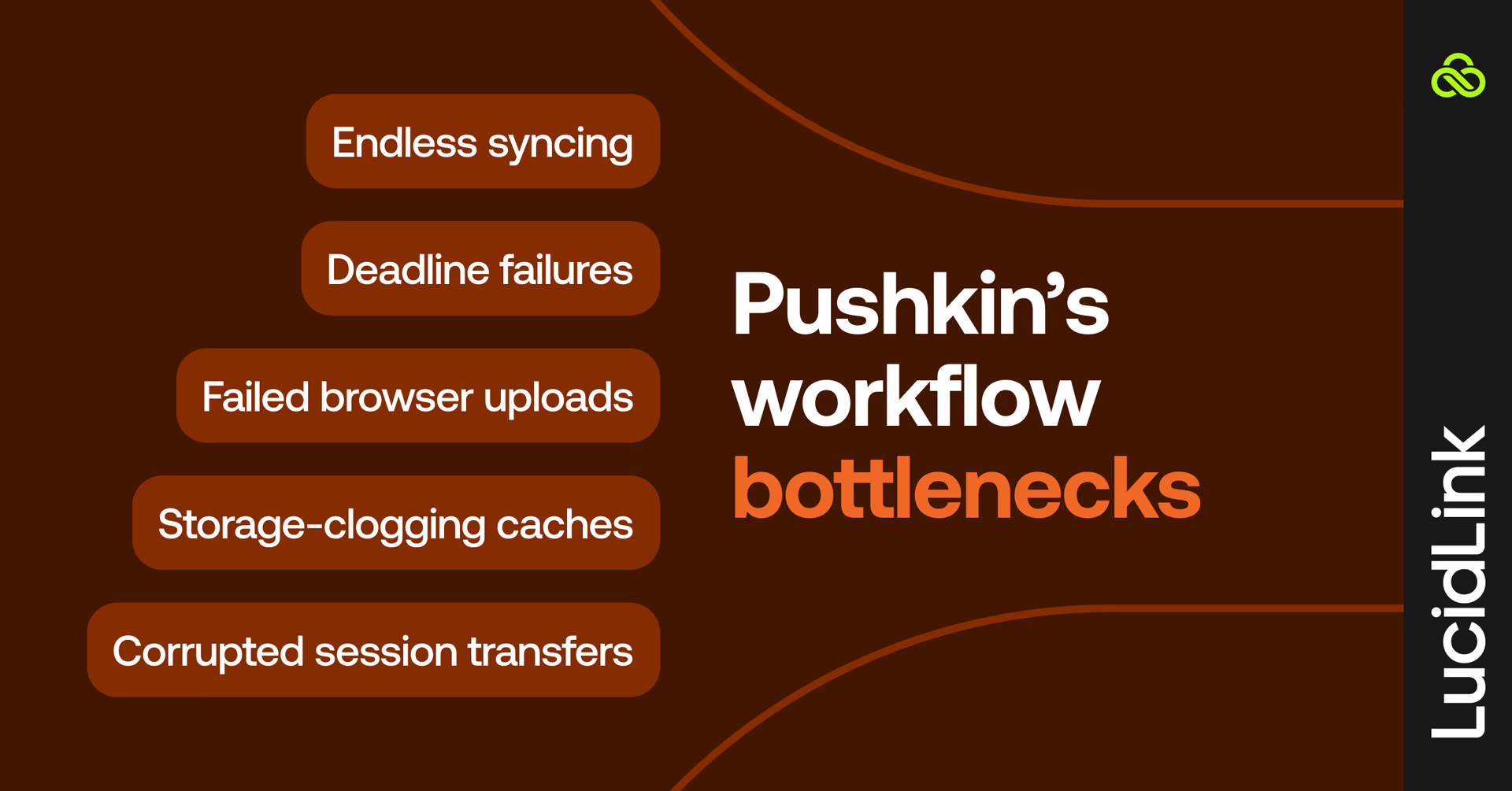
On paper, it worked, but in practice, it added friction to nearly every handoff:
Clicking and dragging files in a browser was extremely slow. Closing the browser could ruin the process
Pro Tools sessions didn’t always translate cleanly
Sync clients filled local drives with massive caches
Files stalled, disappeared, or stayed stuck “syncing forever”
Engineers left machines running overnight hoping uploads would finish
Problems often appeared at the worst possible moments, right before delivery
File sharing introduced constant uncertainty into Pushkin’s production process. Files stalled, disappeared or stayed stuck syncing indefinitely, creating chaos at nearly every handoff.
“Files would get lost in the sauce. Things would be permanently syncing. Sometimes your entire Google Drive would vanish from your desktop,” says Senior Producer Ben N-H. The result was a persistent sense of impending doom around deadlines: the team was doing the work, but the tools weren’t keeping up.
The test: a low-risk pilot with Against the Rules
Pushkin didn’t roll out LucidLink everywhere at once. They tested it on a single season of Against the Rules, a small but demanding production.
The setup was intentionally realistic:
A mix of staff and freelance producers
Two engineers hanging post
Ten narrative episodes plus ten chat episodes
Team members working across time zones
If anything was going to surface problems, this would. Instead, something unexpected happened.
LucidLink became a non-issue
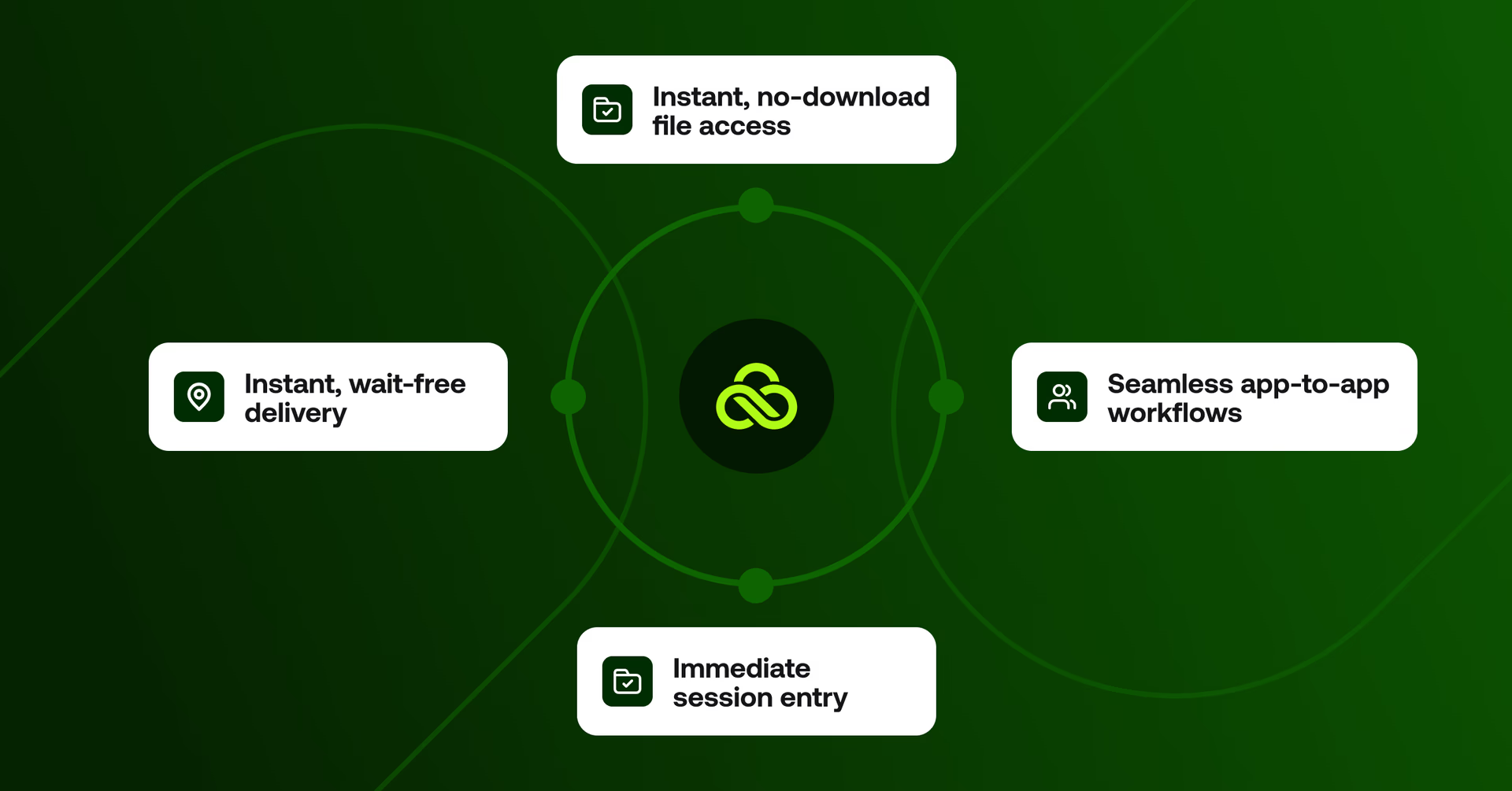
After a short learning curve, LucidLink all but disappeared from the workflow. Which in production, is the goal. Producers could open and play files immediately without downloads, move seamlessly between Descript and Pro Tools and bring freelancers into projects without slowing anyone down.
“You can just click on something and play it,” says Senior Producer Lidia Jean Kott. “You don’t have to download it first. That alone made our lives a lot better.”
Producers could:
Access and play files directly, no downloads required
Move between Descript and Pro Tools without re-uploading sessions
Share work with freelancers instantly
Engineers could:
Jump into sessions earlier
Pin stems when needed
Send mixes and move on without waiting for uploads
It’s been a great tool for me specifically, where I’m not having to address multiple IT issues related to syncing.
Sarah Bruguiere,IT and Engineering Manager
IT stopped getting pinged about broken syncs, corrupted caches or missing files. For a production team, silence is success.
One shared source of truth for active production
With LucidLink, Pushkin moved to a single shared filespace for active audio and video production, organized by show.
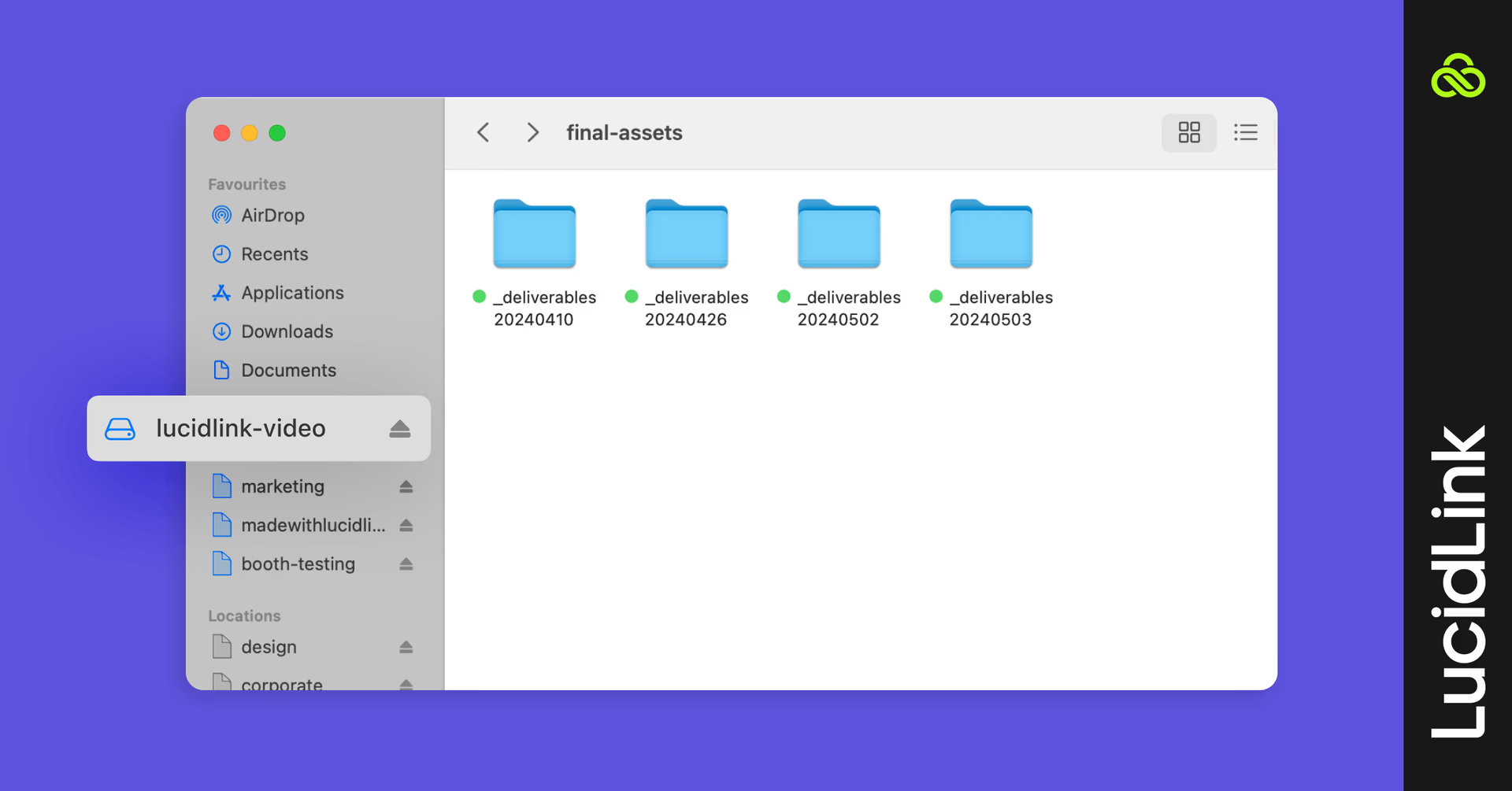
The result:
Everyone works from the same files
Freelancers onboard quickly, no hard drives or complex setup
No duplicated data, no version confusion
Snapshots protect work if something is deleted by mistake
“Having this single place where freelancers can very easily get up to speed and find the material they need is super useful — and essential to get to them quickly,” explains Ben.
Google Drive still plays an important role for scripts, research and documents.
LucidLink handles what it’s built for, large media assets and real-time collaboration.
The impact: fewer fires, more focus
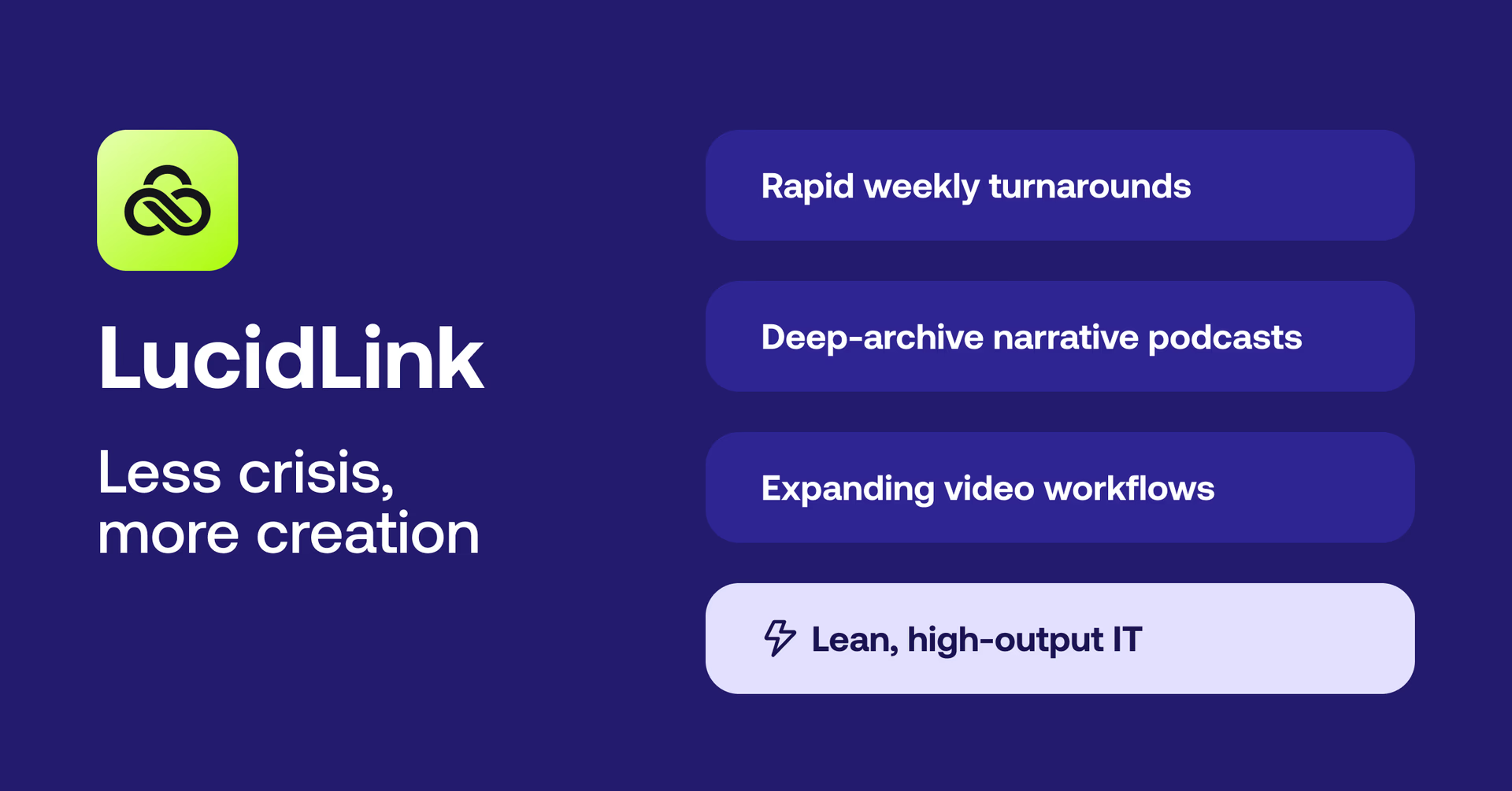
Today, LucidLink supports:
Weekly shows with tight turnarounds
Long-form narrative podcasts with deep archives
Growing video workflows
A small IT team supporting a large creative output
The constant background stress is gone. No more late-night uploads, cache surgery or crossing fingers before deadlines. As Constanza Gallardo put it, “LucidLink really improved our workflow and saved us a lot of time — which used to be one of my nightmares.”
The best production tool is the one you stop thinking about
Pushkin didn’t want to reinvent how they create audio.
They needed infrastructure that could keep up with how they already worked.
LucidLink gave them shared storage that works like local, scales with their output and stays out of the way, exactly where production tools belong.
Ready to keep your productions on deadline?
Discover how LucidLink can help your team collaborate seamlessly on large media files, wherever creativity happens.
Keep reading
How Zaki Rose built a faster, centralized creative workflow with LucidLink
Explore how Zaki Rose transformed production with LucidLink including faster turnarounds, centralized files and seamless creative collaboration.
07 May 2026, 4 mins read

How BIG Creative delivers live sports anywhere with LucidLink
Discover how BIG Creative uses cloud storage for video editing to deliver live sports content from anywhere — faster handoffs, less risk, no hard drives.
07 April 2026, 5 mins read
How Projective helps IT deliver secure creative workflows with LucidLink
Discover how Projective.io delivers secure creative workflows with LucidLink, giving IT full governance while creative teams collaborate instantly.
03 April 2026, 5 mins read