Product & news
Where storage comes alive: LucidLink at NAB 2026
by Samer Kamal ,
Senior Director, Product Marketing, LucidLink
Last updated 16 April, 2026
7 mins

LucidLink started with a simple promise: stop waiting on files.
That idea has come a lot further than most people expected.
Ten years in, LucidLink plays a big part in how modern media gets made. We’ve earned an Engineering, Science & Technology Emmy Award, won NAB Product of the Year four years in a row and our platform is trusted by the world’s leading media and entertainment organizations to run their most demanding workflows.
That’s more than a good run. LucidLink is no longer an interesting new idea trying to earn a place in the industry. We’re foundational technology that underpins modern productions.
Bringing media workflows to life
Going into NAB 2026, we are highlighting a bigger shift happening in media workflows.
Teams must wrangle more content, more formats, more locations and more systems. Content sits in cloud buckets, archives, review tools, repositories, on hard drives, flash drives and even mobile phones.
People work across sites and time zones. This means that people, data and systems are more fragmented than ever before. And the software media companies rely on to bring all of this together now has to work harder than ever.
The real operational shift with AI
That is especially true with AI. Not in the generic, “AI is changing everything” way people keep repeating, but in the real way it is already reshaping the workflow. Media teams increasingly need workflows that are more nimble, more software-driven, and far less dependent on manual handoffs between systems and people.
More steps need to be automated. More tools need to respond in real time. More systems need to make decisions, trigger jobs, surface content and move work forward. That means the infrastructure underneath the workflow has to do more than store files, it has to support faster, more adaptive ways of working.
That’s the NAB story I keep coming back to this year: where storage comes alive.
Storage is no longer somewhere media idly sits. It’s becoming where your workflow begins.
LucidLink Connect brings the workflow closer to the content
Where the story gets bigger this year is with LucidLink Connect.
One of the biggest frustrations users face in media workflows is that content can technically exist but still not be usable fast enough to matter. It is in the archive. It is in the bucket. It is in the review platform. It is in the cloud repository. It is in another system somebody has access to, but nobody has time to wrangle it cleanly into production.
So teams do what they always do: copy it, move it, duplicate it, re-ingest it, make another version or add another manual handoff to the process.
That’s expensive and slow. But after a while teams accept it as normal.
Stream and access external content
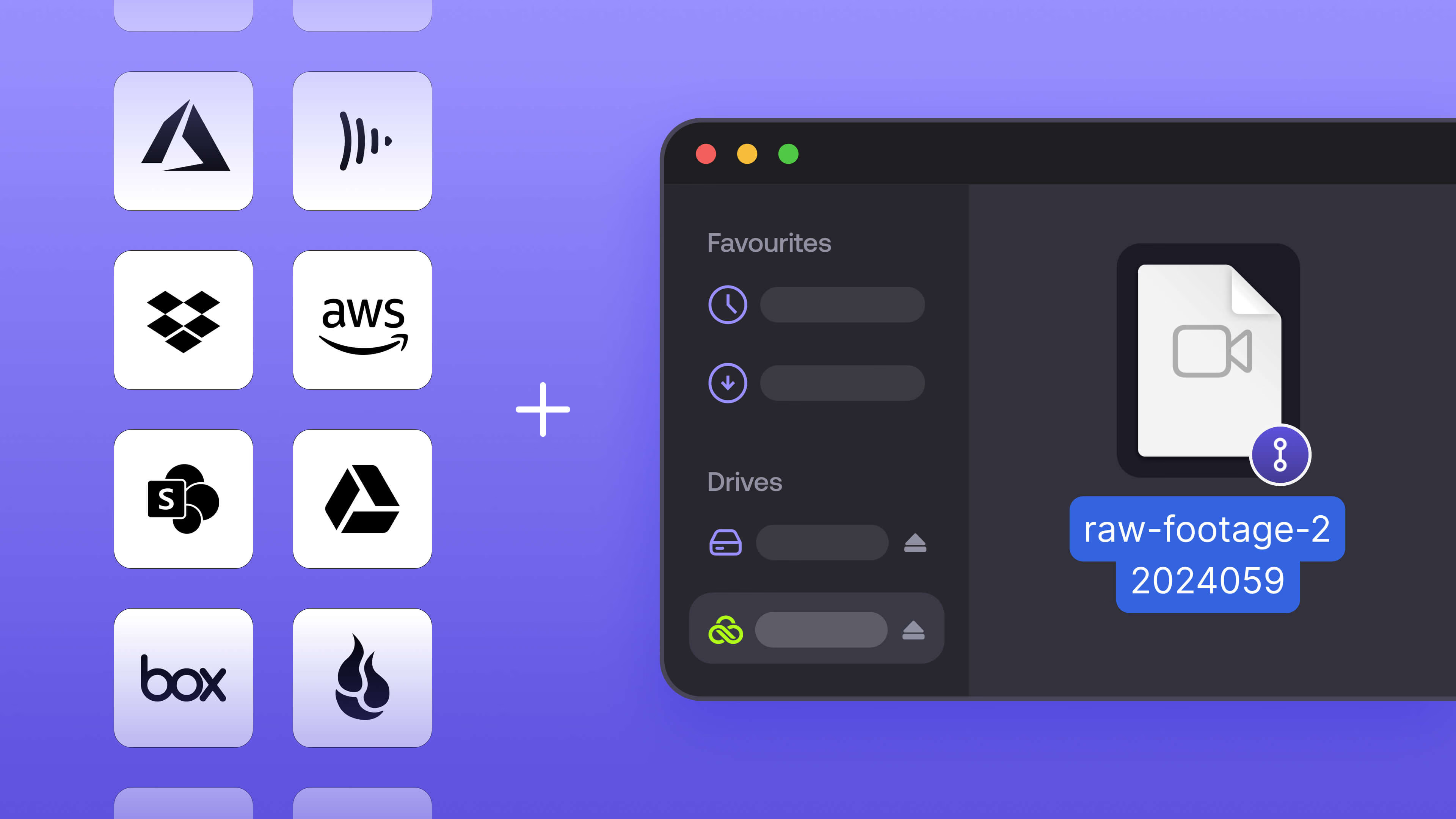
LucidLink Connect changes that. It lets teams access and stream external content directly inside LucidLink, whether that content lives in object storage like S3, cloud repositories, review platforms like Frame.io, productivity environments like Dropbox, Box or Google Drive or other workflow systems.
The impact goes beyond connecting sources. Because the workflow all lives in one, unified environment, teams can now begin work without moving content first.
This is a paradigm shift. Instead of treating storage, review, collaboration and operational systems as separate stops, LucidLink Connect starts pulling them into one coherent flow.
The content stays where it is. The workflow comes to it.
The immediate value for media organizations
For broadcasters, post teams, creative operations groups and larger media organizations, that has immediate value.
Older media tucked in some corner of your production universe is now easier to activate. The review and approval process now sits closer to active production. Content that used to be one step removed from the actual work becomes usable sooner. There are fewer handoffs, fewer duplicate copies and less drag between "we have it" and "we can work on it."
That is why I don’t think of LucidLink Connect as just another connectivity feature. I think of it as a response to the actual chaos teams are living with: too many systems, too many copies and too much friction between where content lives and where work happens.
LucidLink Connect solves that by bringing more of the workflow into one working environment, without forcing teams to move or duplicate content first. Read more about our new integrations here.
LucidLink Developer Tools make the workflow programmable
The other major part of the story is LucidLink Developer Tools.
If LucidLink Connect is about bringing more content and more systems into the workflow, LucidLink Developer Tools is about making that workflow programmable.
It brings together APIs available today, LucidLink Connect integrations and a new SDK (patent pending) in beta so technical teams can automate operations, integrate LucidLink into their own systems and build workflows directly in code.
That is a much bigger deal than "developer tools" makes it sound.
When workflows become software-driven
The media workflow is no longer only a human workflow. It still revolves around people, of course.
Editors, assistants, producers, artists, operators and coordinators remain central. But more of the actual movement around the work now happens in software: provisioning, metadata, orchestration, review triggers, content routing, internal tools, automation and increasingly agentic systems that can act on events and move things forward.
LucidLink Developer Tools is how LucidLink starts providing immediate, direct value.
We already see that potential for teams everywhere. APIs already support administration, workflow automation, permissions and linked-data operations. The Python SDK in beta pushes that further into backend, media, automation and AI-oriented use cases.
What SDKs and APIs unlock
What matters most to me is not the language of SDKs and APIs by itself. It’s what they unlock: a future where applications, pipelines, automations and emerging agentic workflows can participate in the same environment as the people doing the work.
This is where we believe media workflows are heading next.
The teams that succeed in the next era of media will be the ones with systems that support the people doing the work instead of slowing them down. As workflows become more distributed, automated and software-assisted, the real advantage will come from infrastructure that keeps content connected and work moving without adding more barriers around the creative process.
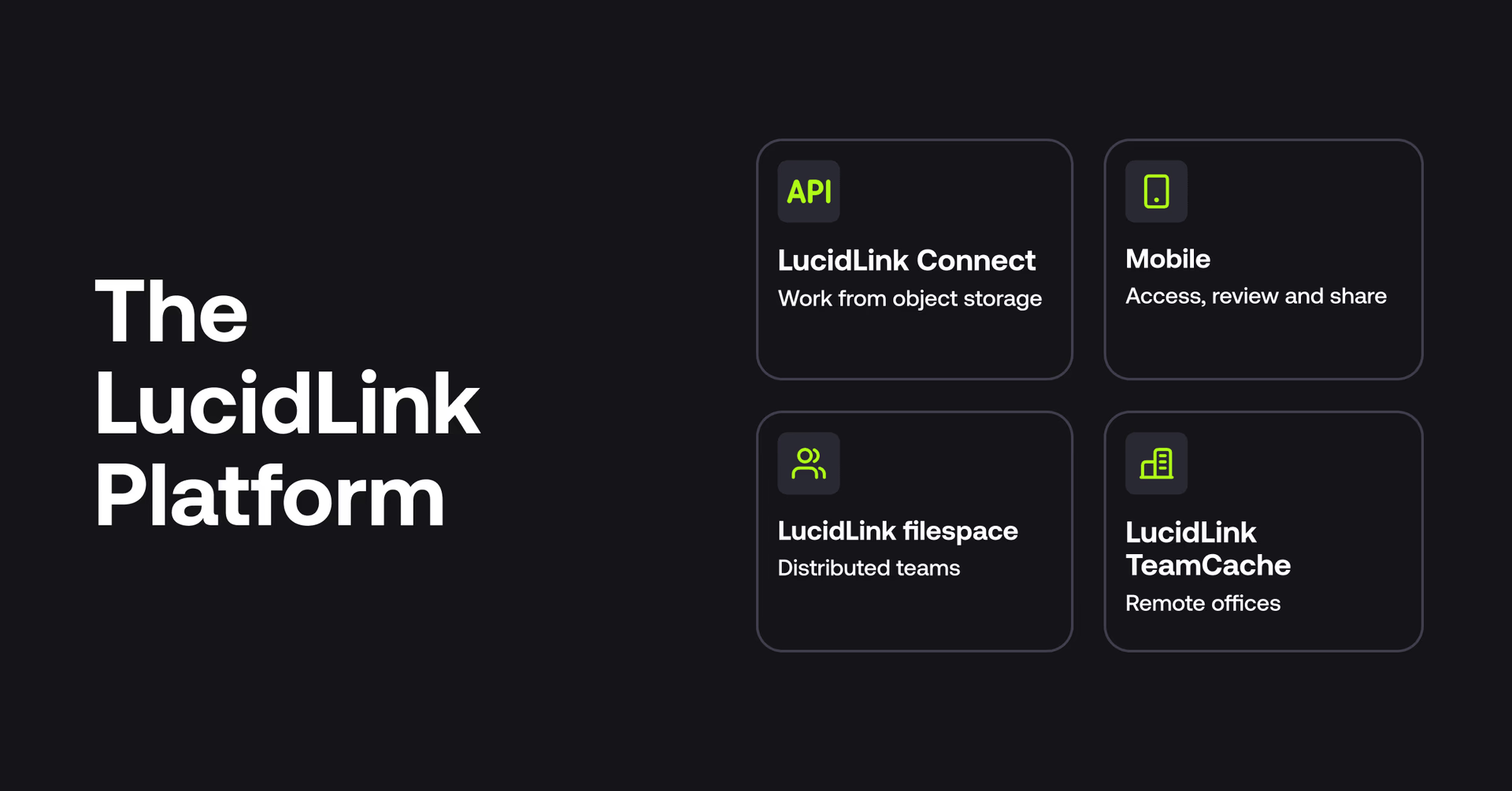
TeamCache, web and mobile round out the platform story
The broader platform story does not stop with LucidLink filespace, LucidLink Connect and LucidLink Developer Tools.
We are also featuring TeamCache, along with web and mobile experiences that make LucidLink more accessible across different parts of the workflow.
TeamCache is important because performance at the edge still matters. Web and mobile matter because not every interaction with content starts or ends on a workstation. Together, these pieces help round out the story of LucidLink as something larger than cloud file access alone.
That is really the through-line here.
LucidLink is building toward a platform that can support the full reality of modern media workflows: live production, post, archive activation, distributed collaboration, technical automation and software-driven operations.
The bigger picture
If I had to sum up this year’s NAB story in one line, it would be this: storage is changing from a passive destination into an active part of the workflow.
That’s what we mean by storage coming alive.
For customers, this is more than a product story. It is an operating-model story.
It means having a system that does more than hold content. One that brings together the right people, the right data and the right workflow faster, with fewer bottlenecks in between.
That matters whether you are a smaller team trying to stay nimble or a large enterprise trying to reduce operational drag at scale.
Teams don’t want more tools, or even faster point solutions. They want the right platform underneath the work — one that keeps content accessible, workflows connected and the software around them capable enough to help move work forward without creating more chaos around it.
Media and entertainment has always been a fast-moving industry, but the way content gets made has now changed for good, whether you are a smaller creative team, a post house, a broadcaster or a global media enterprise.
Workflows are more distributed, more software-driven and more connected to systems around them than ever before. And while LucidLink is now 10 years old, it still feels like we are just getting started. Be on the lookout for new ways to activate content without friction and more ways to bring people, applications and intelligent workflows together around the same data.
If you’re at NAB, come see us
If you’ll be at NAB this year, stop by Booth N2940.
We’d love to show you how LucidLink is turning storage into an active part of the media workflow.
And if you won’t be there in person, stay tuned for our after-show webinars, where we’ll take a deeper look at everything we’re announcing and where it all goes next.
Keep reading
Product & news
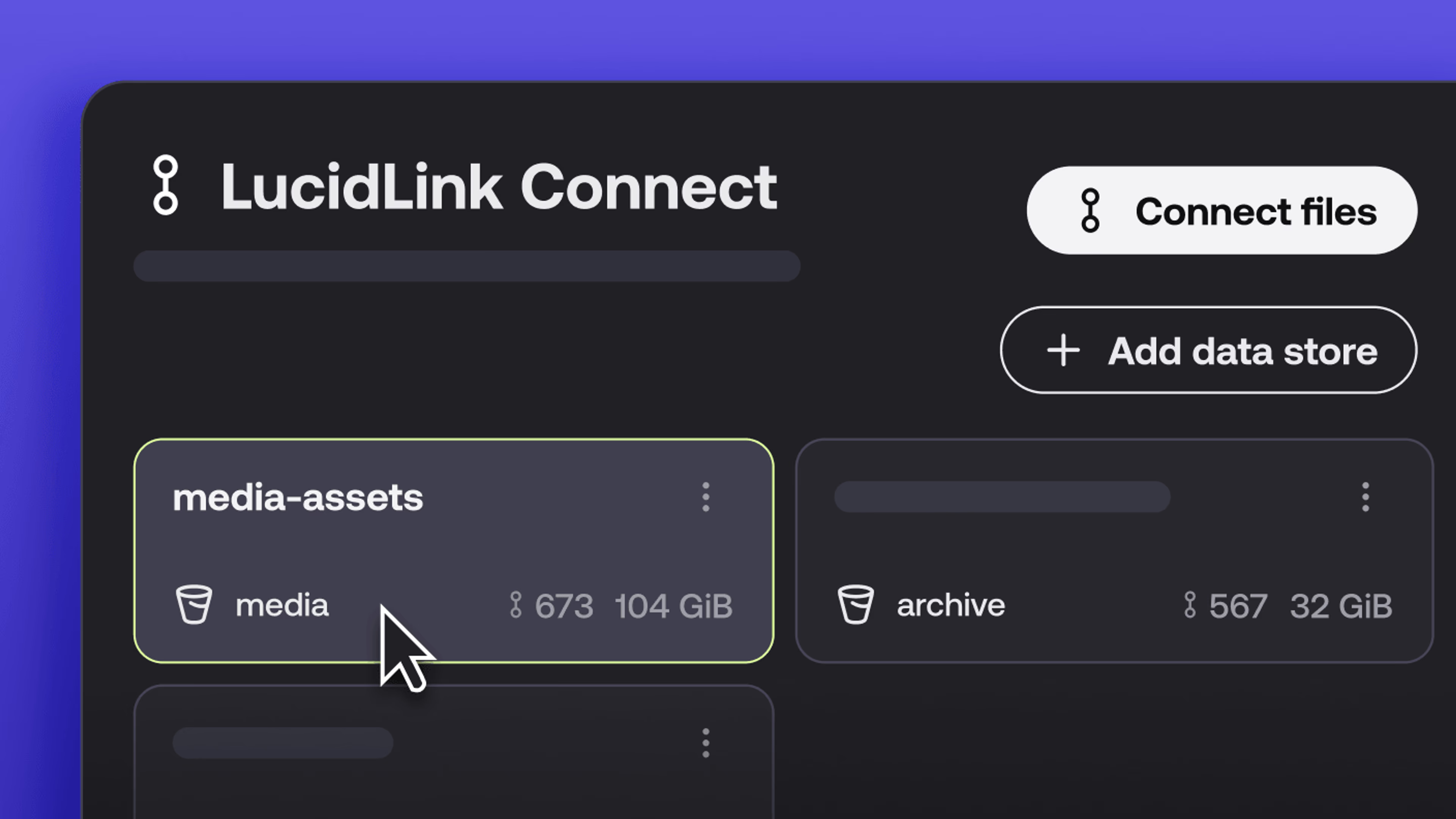
New in LucidLink Connect: simpler storage management
LucidLink Connect makes distributed storage easier to manage, with a new UI for connecting and managing data available through LucidLink.
06 October 2026, 2 mins read

Product & news
LucidLink named Leader in G2's Cloud File Storage report: here’s what customers say
See why LucidLink is a leader and rated #1 for customer satisfaction on G2’s Cloud File Storage report.
03 September 2026, 3 mins read
Product & news
Hard links: one file, multiple paths, no duplication
Hard links let VFX teams reference the same file across multiple paths without duplicating data. Available now at no additional cost.
02 September 2026, 4 mins read
Join our newsletter
Get all our latest news and creative tips
Want the details? Read our privacy policy. Not loving our emails?
Unsubscribe anytime or drop us a note at support@lucidlink.com.