Product & news
10 years of LucidLink: a decade of making distance disappear
Last updated 15 January, 2026
6 mins

It’s 2012.
George Dochev is leading engineering teams spread across France, Bulgaria and the US. On paper, it’s a modern setup. In practice, every day follows the same frustrating rhythm.
A build goes out at 9 am Paris time. Hours pass while it syncs to Bulgaria. The US team checks in while they’re still downloading yesterday’s files.
By the time everyone is looking at the same version, half the day’s already gone.
The tools the team relied on promised collaboration across distance. What they didn’t mention was the tradeoff: you can work from anywhere, as long as you’re willing to work slowly.
George started questioning the premise itself. What if distance wasn’t the real problem? What if cloud data didn’t have to feel remote at all?
Breaking the rules of storage

It all started with a prototype.
The idea was simple, but radical: what if you could open a file in the cloud the same way you open one on your desktop?
No downloading, no syncing and no waiting for progress bars to crawl across the screen. You just… open it.
Instead of copying entire files back and forth, stream only the data you need, exactly when you need it. The file stays in one place. And behaves like it’s local.
Today, we call the technology file streaming. Back then, it quietly broke nearly every assumption about how cloud storage was supposed to work.
Most systems relied on VPNs or sync and share tools, which led to countless workflow bottlenecks: teams juggling version conflicts, duplicate files and wasting hours waiting. Hours that should have been spent creating, editing or producing.
From prototype to “how is this even possible?”
When George showed the prototype to former DataCore colleague Peter Thompson, the reaction was immediate.
When George gave me that first product demo, I was blown away. It should not have been possible. It seemed like magic and that continues to be one of the most common reactions we get when demonstrating LucidLink.
Peter Thompson,LucidLink CEO
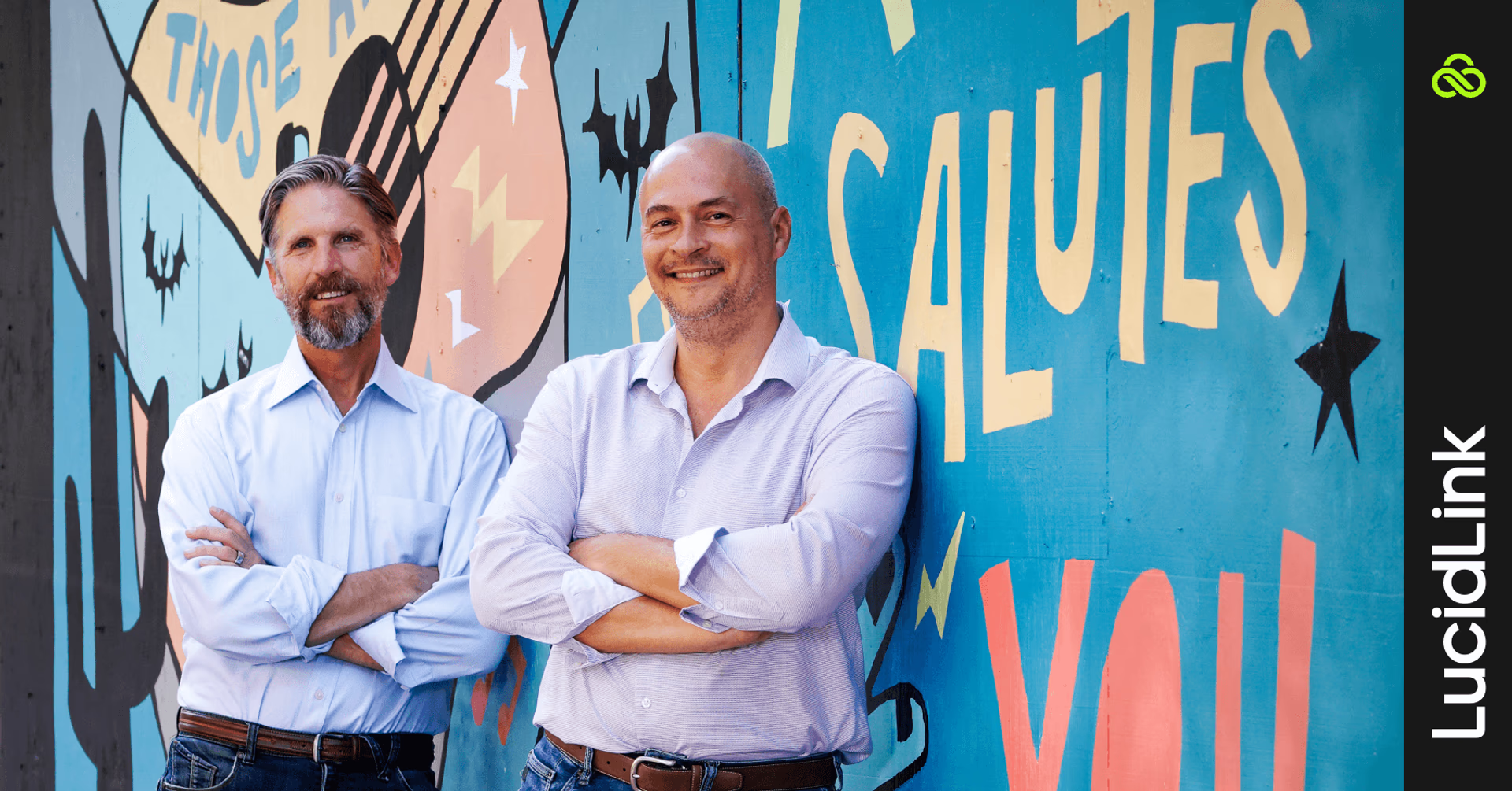
The tech wasn’t an incremental improvement, shaving a few minutes off transfer times. It was bringing the kind of instant access people only recognized from streaming a movie at home into enterprise workflows. Suddenly, a problem teams everywhere had long learned to tolerate was gone.
But industry wisdom said it couldn’t scale. Latency would kill performance. The architecture would collapse under real workloads.
George and Peter decided to find out anyway.
Belief is earned, especially when it’s hard
In January 2016, LucidLink was founded on a single conviction: data should be instantly and securely accessible from anywhere.
Almost no one else believed that was possible.
Early fundraising was brutal, with 33 straight investor rejections.
The feedback was consistent: too ambitious, too risky and technically improbable.
Instead of softening the idea, the founders sharpened their focus: solve data over distance properly, build something that works under real production pressure and ignore the noise.
Progress soon came in real milestones:
A $1.6M seed round closed in late 2016
The first office opened
Beta released in 2017
LucidLink 1.0 launched in 2018
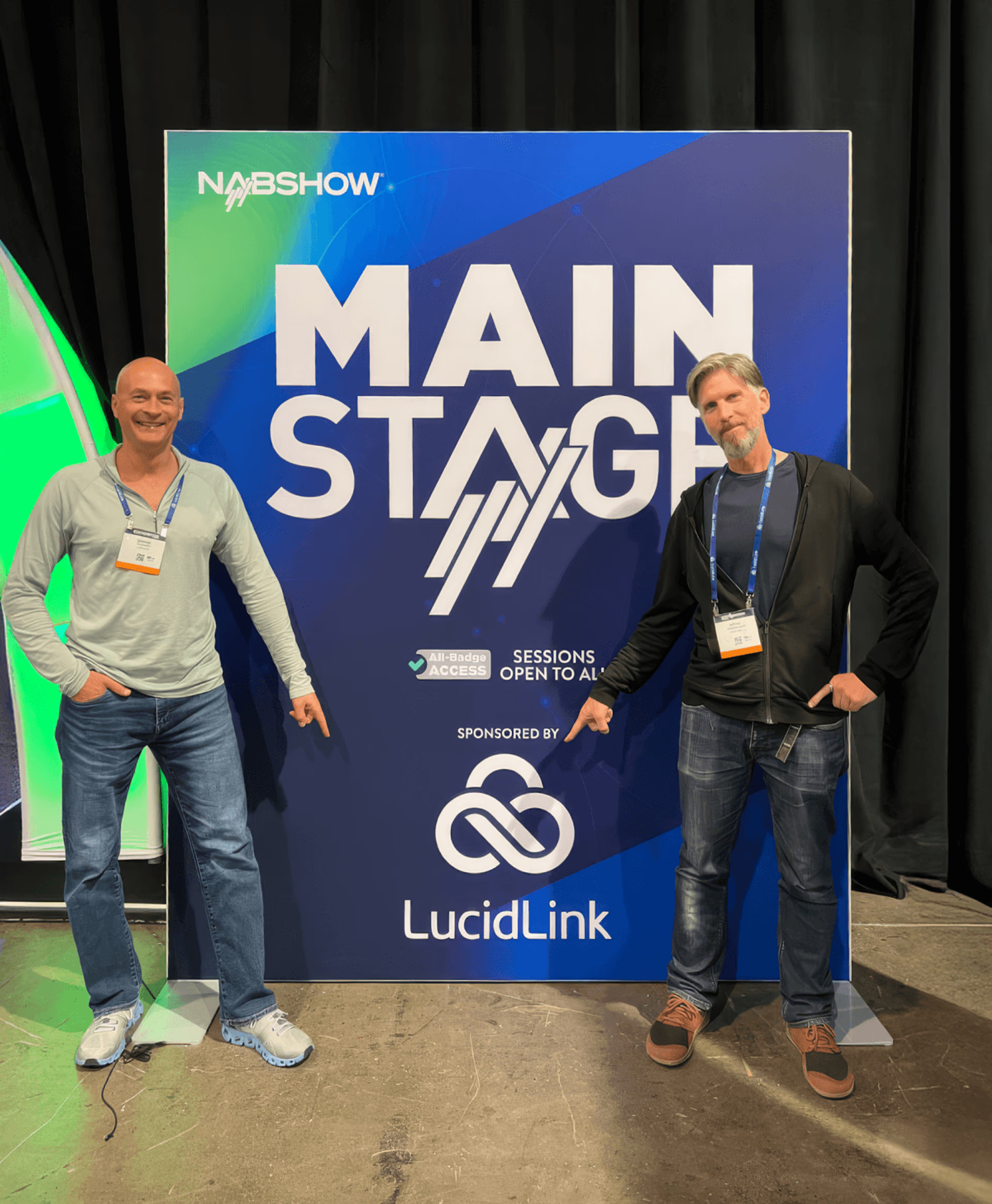
Then came the moment that mattered most. The first paying customer put LucidLink into a real production workflow and kept it there.
The idea worked. Not just in theory, but in practice.
When the world went remote overnight
By early 2020, LucidLink was gaining traction. Then the world shut down.
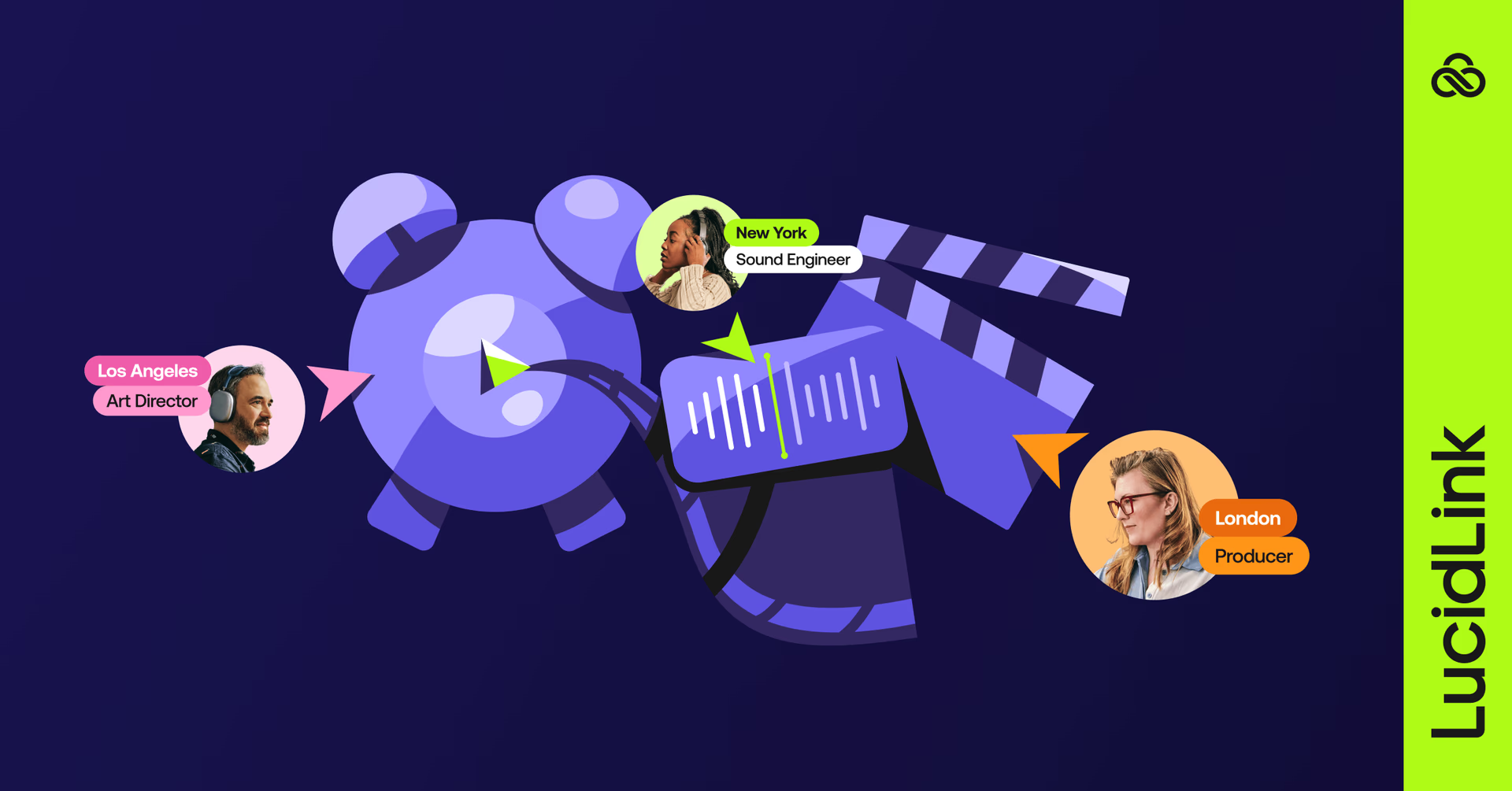
Remote work went from optional to mandatory. Media and broadcast teams were sent home overnight. Editors, producers and engineers were suddenly expected to move terabytes of data over home internet connections and keep production running.
The calls started coming in.
Studios and broadcasters didn’t want a roadmap, they needed answers now. Proof of concepts became mission-critical systems in weeks.
At the same time, global funding froze and budgets evaporated. Inside LucidLink, the outlook was just as uncertain. But instead of scaling back, the team doubled down. Doing whatever it took to stay the course and support customers who suddenly depended on them.
For the first time, product-market fit wasn’t theoretical. It was happening live, under pressure.
Since then, we haven’t looked back.
Today, post-production teams collaborate across continents as if they’re in the same room. Sports broadcasters can cut highlights in real time from living rooms and spare bedrooms. And architecture firms open massive CAD files on demand, regardless of where their teams are based.
Changing the way teams work
As LucidLink has scaled, it’s become clear: distance no longer needs to shape how teams work.
Creative teams love that they can open files instantly, collaborate in real time and keep using the tools they already know.
“We didn’t have to change how we work, LucidLink just made it faster and simpler,” says Ben Nitka, Post Supervisor at Madecraft.
And these time-saving workflows have had a tangible impact on people’s lives.
We can have a 24-hour working day without a single editor having to work outside of normal hours. All just by having LucidLink as the backbone of our infrastructure. That’s super important to us.
Katie Wade,US Head of Post Production at Casual
Hundreds of teams have felt the same benefits; reclaiming time for family, flexibility and focus, without compromising on their work
Same platform, different priorities
Adoption by individual teams soon expanded to entire organizations, and so the conversation naturally broadened.
IT and enterprise teams care just as much about security, control and predictability as they do about performance. But with LucidLink, teams don’t have to choose.
Our zero-knowledge security model means customer data stays private by design. Granular permissions make access management straightforward. Snapshots add built-in protection against mistakes, ransomware or accidental deletes.
Just as importantly, the economics make sense:
No physical storage to ship or maintain
No duplicated data sprawled across endpoints
Predictable scale, without surprise egress fees or infrastructure costs
“With LucidLink, we upload files to the cloud and work directly from there. There’s no downloading and syncing, making it much easier to manage large files, and we don’t need to ship physical hard drives," explains Hagai Lazar, VP of Global Video Production at Minute Media.
The same platform solves different problems for different teams, without forcing tradeoffs.
Scaling what no one thought was possible
What started as an “impossible” idea kept building.
We crossed 1 petabyte of managed data in 2020. Five petabytes followed soon after. Today, more than 85 petabytes are managed globally.
The product evolved through LucidLink 2.0 and into the new LucidLink, with redesigned experiences across desktop, web and mobile. Integrations deepened, from Adobe Premiere Pro and After Effects to workflows with EVS, Moments Lab and Frame.io.
The company scaled, too:
Series A: $12M
Series B: $20M
Series C: $75M
Headcount grew to over 250

Focus sharpened on media, broadcast and live sports, without losing sight of enterprise requirements around compliance, uptime and integration.
The idea most believed wouldn’t scale now supports thousands of teams across more than 150 countries.
Ten years, by the numbers
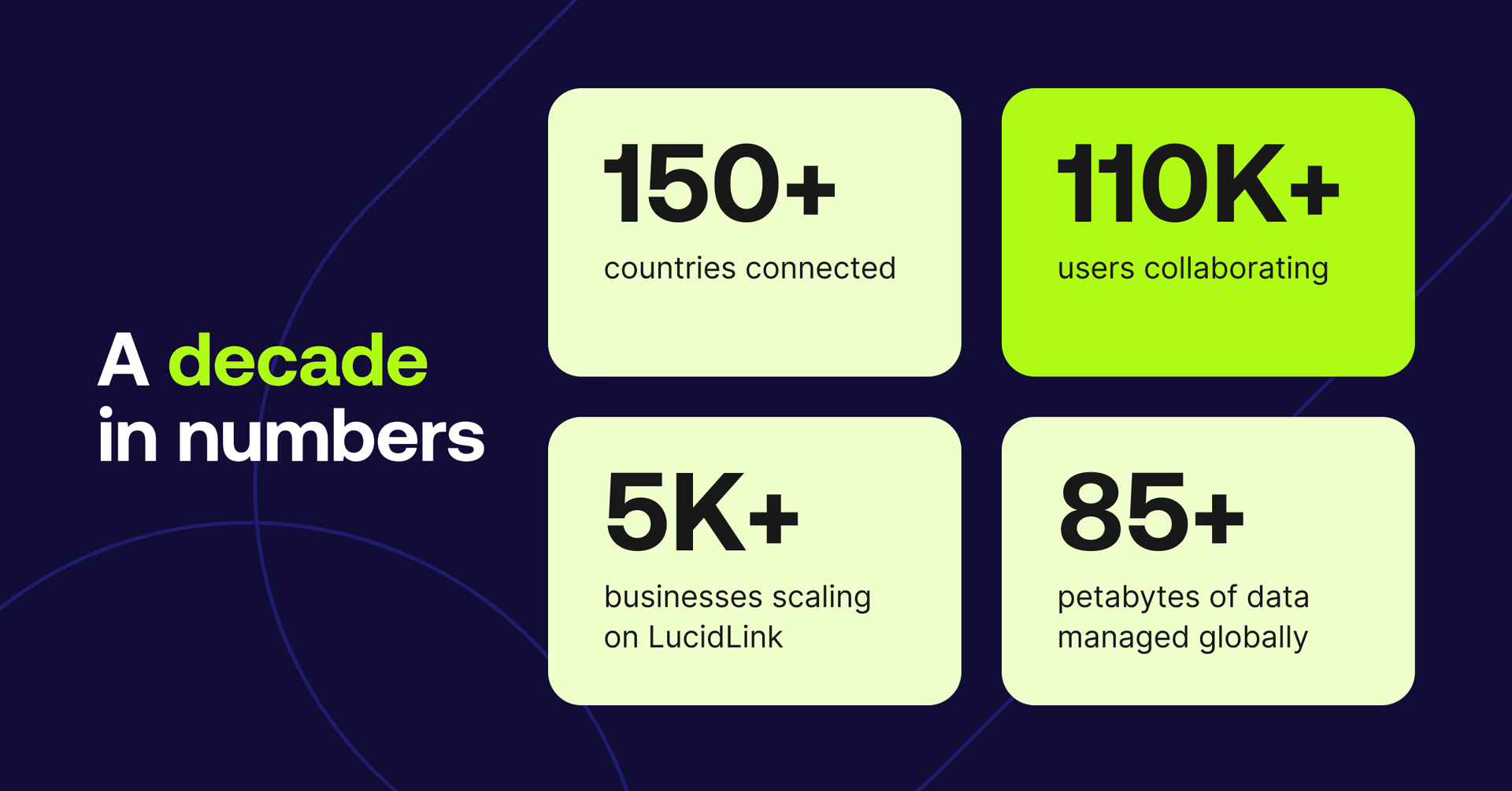
A decade in, the numbers tell their own story:
150+ countries connected
110,000+ users collaborating
5,000+ businesses scaling on LucidLink
85+ petabytes of data managed globally
Recognition that followed real impact
We don’t build for awards, but they’re a strong signal that we’re solving a problem that matters.
We’ve won the National Association of Broadcasters (NAB) Product of the Year four years in a row — an industry record. We’ve powered Oscar-winning productions like The Boy, the Mole, the Fox and the Horse and Emmy-winning shows like The Bear fully remotely.
And in 2025, came another huge milestone:
LucidLink was awarded an Engineering, Science & Technology Emmy® Award, recognition that we’ve changed the way television is made.

But the technological breakthrough applies beyond broadcasting to any team working together on large files.
For decades, the rule was simple: big files live on local drives. Collaboration meant shipping drives, building bigger servers or moving people closer to the data. LucidLink flipped that model. Files stay in one place and teams access them from everywhere.
The Emmy confirmed what our customers already know: a problem the industry had tolerated for years no longer needs to exist.
Still rewriting the rules ten years in
Ten years in, the challenges haven’t changed.
Distance still exists, files are still growing and turnaround times are shorter than ever.
But we’ve proved that with the right foundation, teams can deliver exceptional work, regardless of location or file size.
To everyone who’s been part of this journey — our team, customers and partners — thank you. Your belief, feedback and persistence have shaped what LucidLink is today.
Here’s to carrying on rewriting the rules, together.
Keep reading

Product & news
LucidLink wins 2026 Inc. Power Partner Award in AI, Technology & Development
LucidLink has been named a 2026 Inc. Power Partner in AI, Technology & Development, recognizing the results we deliver with customers and partners.
23 October 2026, 3 mins read

For developers
Product & news
A dashboard for your filespace, built where your keys are
Build a dashboard for your LucidLink Filespace from its audit trail with an agent skill for Claude Code and Codex, without touching zero-knowledge encryption.
19 October 2026, 4 mins read
Product & news
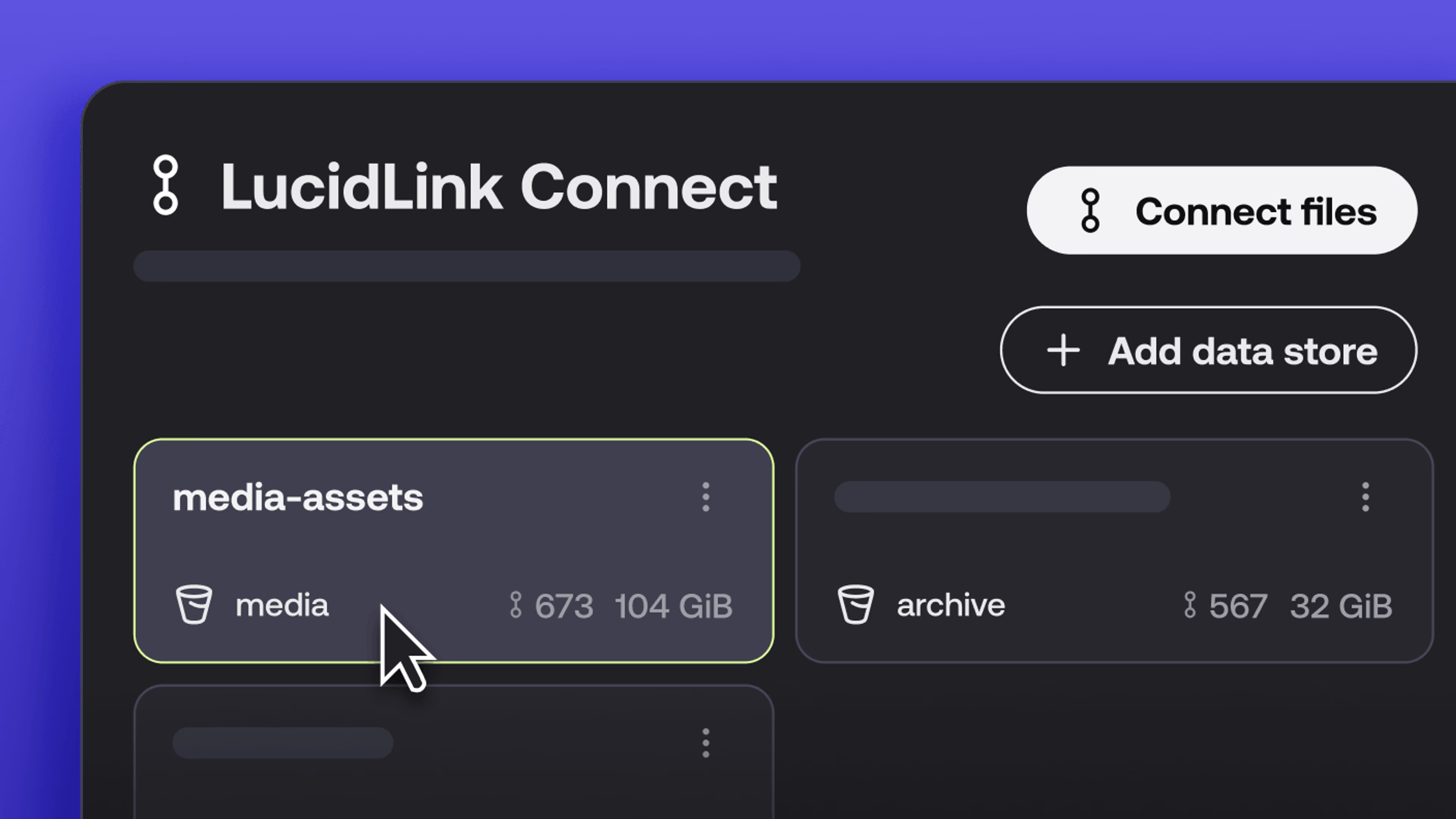
New in LucidLink Connect: simpler storage management
LucidLink Connect makes distributed storage easier to manage, with a new UI for connecting and managing data available through LucidLink.
06 October 2026, 2 mins read
Join our newsletter
Get all our latest news and creative tips
Want the details? Read our privacy policy. Not loving our emails?
Unsubscribe anytime or drop us a note at support@lucidlink.com.