Cloud storage
Collaboration
Product & news
The best Nasuni alternative for cloud collaboration
Last updated 19 February, 2026
6 mins

If you’ve spent any time with Nasuni, you probably know the pitch: cloud performance, without the cloud problems.
The reality can feel very different.
Caching appliances to deploy and maintain. Replication delays that turn “global collaboration” into a waiting game. VPNs that quietly creep back into workflows that were supposed to be modern and flexible.
Every middleman claims to make things faster — whether it’s filers, gateways or caches. In practice, they often just add cost, complexity and more points of failure.
That frustration is why so many AEC, media and enterprise IT teams start looking at Nasuni competitors and Nasuni alternatives in the first place.
LucidLink takes a fundamentally different approach: direct, secure file streaming from the cloud. No appliances, no sync layers and no staging files through an office before someone can work.
Just instant access to exactly what each team member needs, the moment they need it.
Where Nasuni works (and where it breaks)
Nasuni is a cloud-based file services platform designed to modernize traditional NAS environments for distributed teams.
At its core, Nasuni uses an edge filer architecture:
A central cloud backend stores authoritative data
Physical or virtual filer appliances sit in branch offices
Files are cached locally and synced between locations
For organizations with office-centric teams, predictable access patterns and a need to modernize legacy NAS without ripping everything out, edge filers solved real problems.
Where Nasuni holds up
Capabilities like global file locking, snapshots and centralized management remain table stakes for enterprise file systems. Nasuni delivers them reliably, along with rapid branch office deployment compared to traditional file servers.
For firms anchored to physical offices, with most work happening close to a filer, this architecture was a clear step forward. It brought cloud durability and centralized management to a world that still revolved around offices.
But work has changed.
Where the model breaks down
Nasuni’s benefits come directly from its architecture, but so do its limitations. As teams scale and work becomes more distributed, the edge filer model introduces friction.
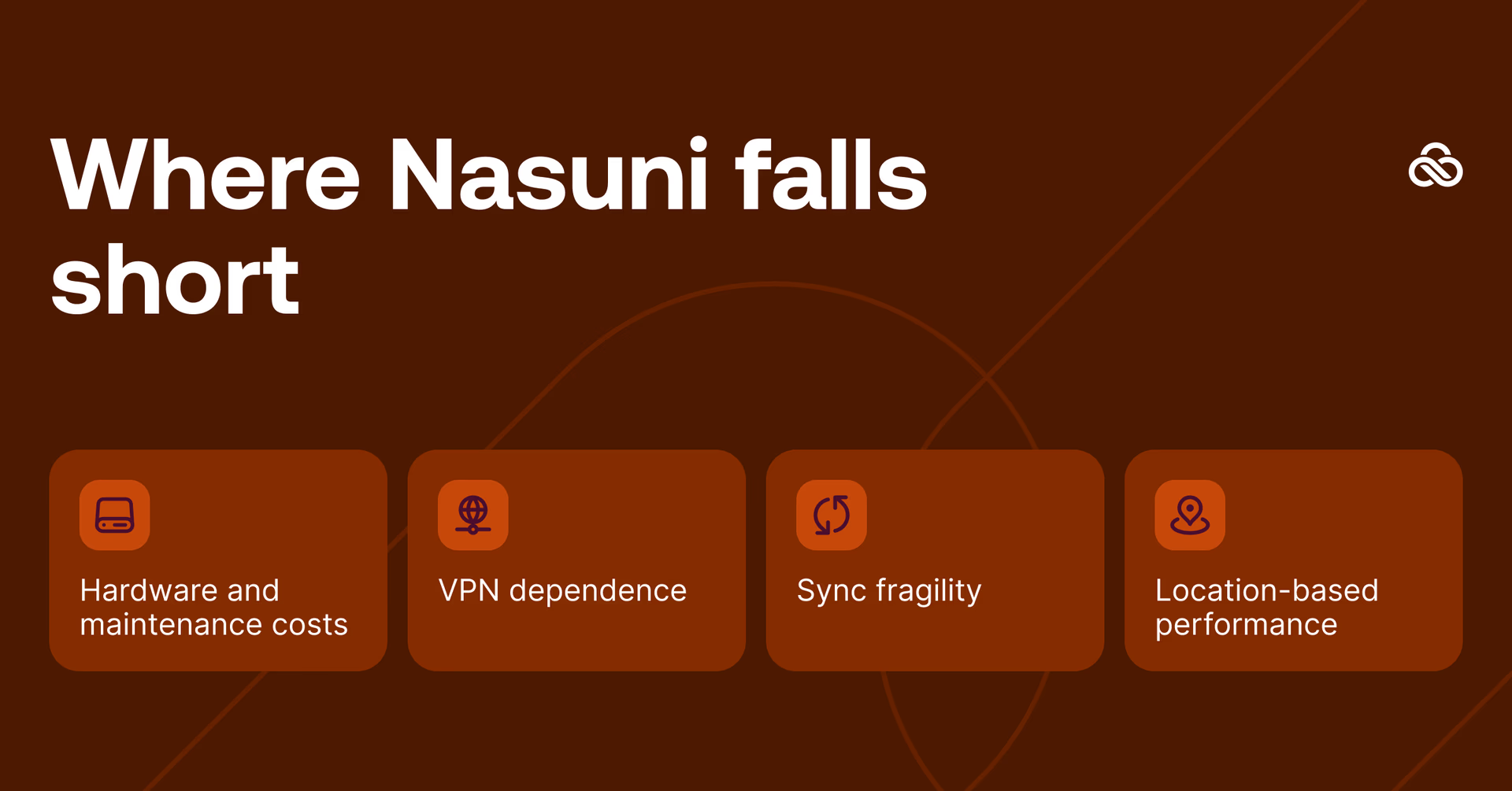
Hardware and maintenance costs
Every office needs a filer node. That means procurement, refresh cycles, monitoring and troubleshooting. Cloud storage savings can quickly get eaten by appliance overhead.
VPN dependence
Remote users often need to connect back to a filer to get acceptable performance. VPNs reintroduce latency, security risk and IT support tickets — the very things cloud was meant to eliminate.
Sync fragility
Replication between filers isn’t instant. Conflicts happen. Sync jobs fail. Large file updates bottleneck collaboration when teams need to move fast.
Location-based performance
Performance depends on proximity to a filer. Move people out of offices or collaborate across regions and the experience becomes inconsistent.
The challenge comes down to architecture. Nasuni solves “fast cloud access” by inserting hardware in the middle. LucidLink solves it by removing the middleman entirely.
Why teams explore Nasuni competitors
Modern teams working with large files don’t think in terms of filers or branch offices. They think in terms of work getting done.
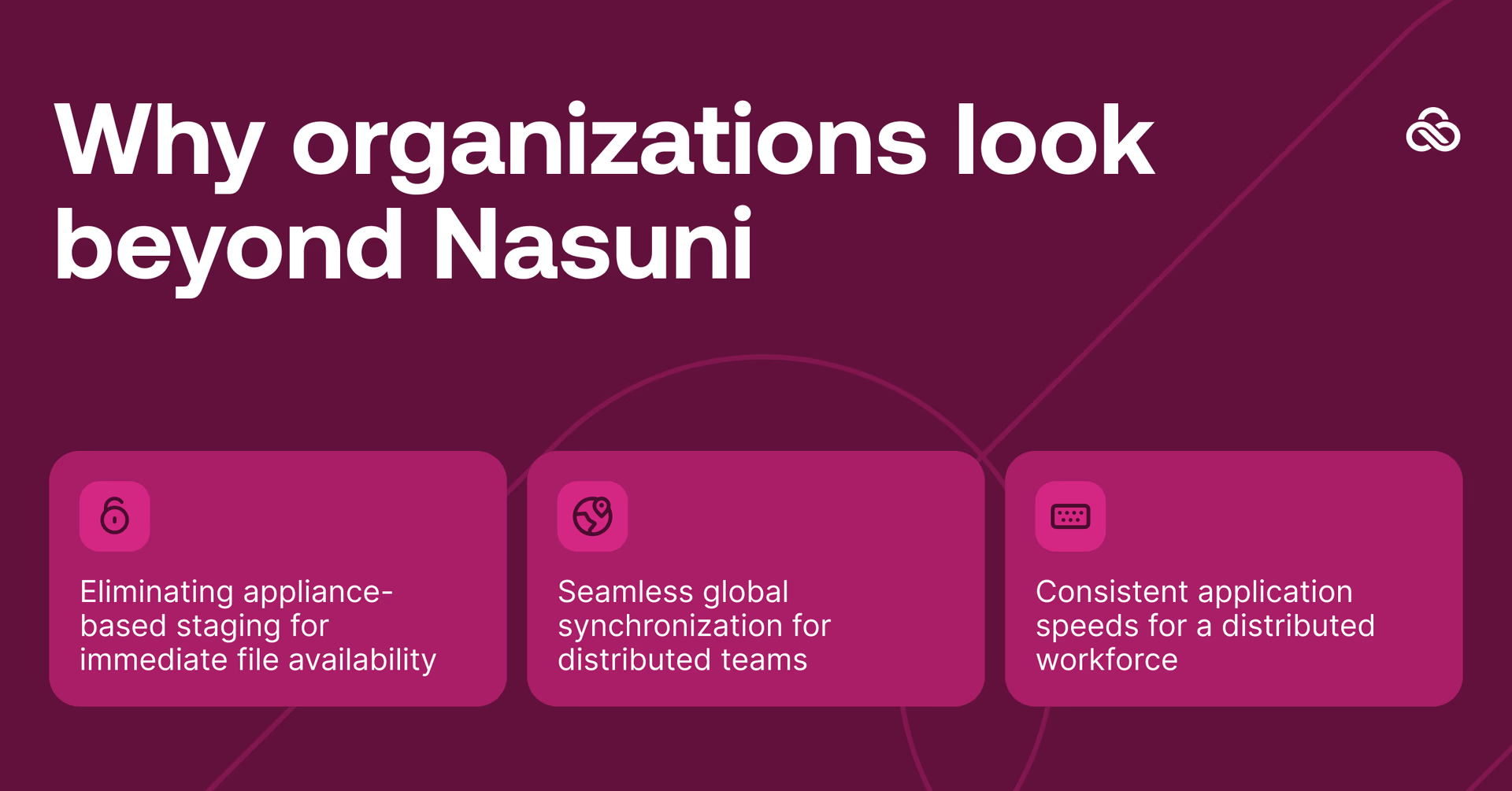
AEC firms, studios and enterprise teams handling CAD, BIM, GIS, video and 3D data need:
Instant access without staging files through appliances
Real-time collaboration across cities and time zones
Predictable performance for remote and hybrid staff
Edge filer models start to strain under those demands.
Where edge filers stop scaling
Every new office means new hardware
Every new region adds replication complexity
VPNs quietly become “required” again
IT spends more time maintaining infrastructure than enabling work
That’s why searches for Nasuni competitors keep growing. Teams want to know if the model supports how they actually work.
What a true Nasuni alternative should do
The real question for teams evaluating Nasuni competitors is which solution removes the most friction.
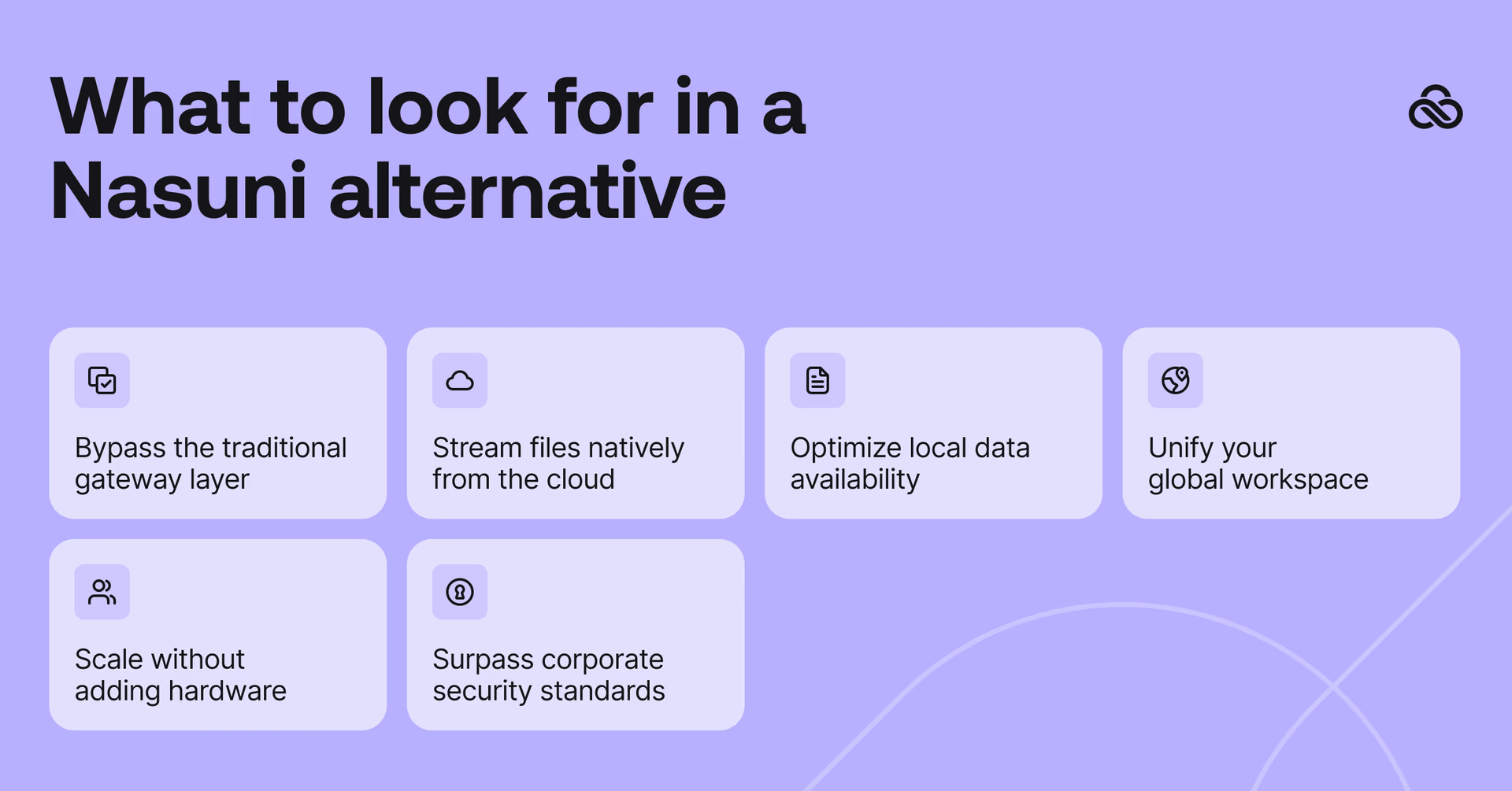
A true Nasuni alternative should:
Remove the middleman: no on-prem hardware or filer nodes required
Stream files directly from the cloud: only the data blocks you touch, nothing staged or pre-synced
Use smart local caching: each user caches what they need automatically, not entire folders
Enable real-time collaboration: changes appear instantly, without conflicted copies
Scale without infrastructure sprawl: add users and locations without adding hardware
Meet enterprise security standards: zero-knowledge encryption, granular permissions and time-machine-style snapshots
This is where LucidLink diverges sharply from edge filer platforms.
How LucidLink solves the large file problem
LucidLink is cloud-native file storage built for performance, not retrofitted for it, which matters when an AEC team is working with large CAD, BIM and GIS files every day.
There are no appliances, no gateways and no sync jobs running in the background.
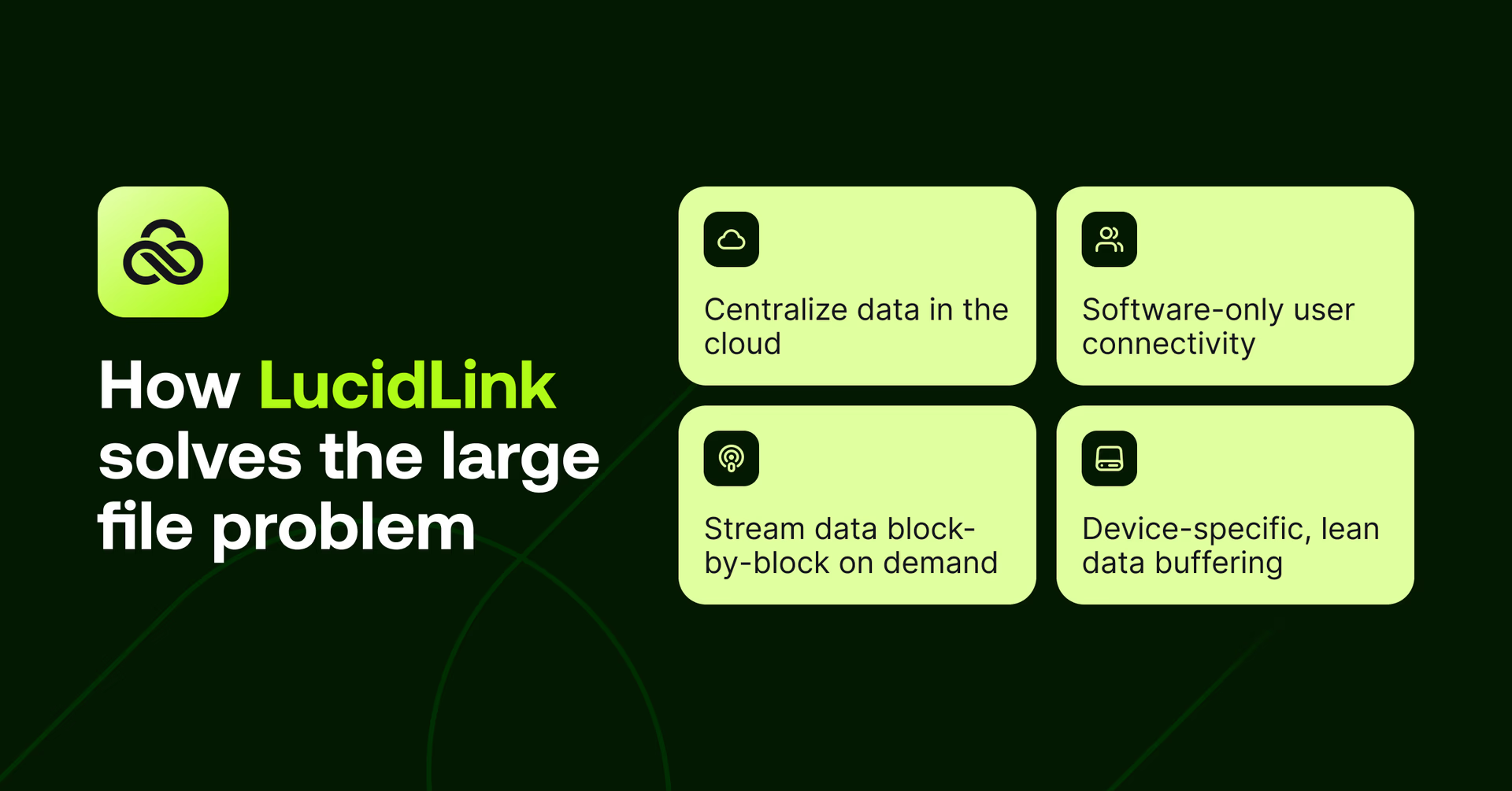
How it works
Files live in object storage in the cloud
Users connect via lightweight client software
Data streams on demand, block by block
Each device caches only what’s needed
To the user, it feels like a local drive. To IT, it’s a fully managed, software-only platform.
What that changes in practice for AEC teams
No appliances, no gateways
Nothing to deploy in offices. Nothing to refresh every few years. That simplicity is especially valuable for firms supporting hybrid AEC workflows, where staff move between offices, home and job sites.
No VPNs
Users connect securely from anywhere with an internet connection. Remote access doesn’t depend on which office hosts the filer or whether a VPN is behaving that day.
One shared source of truth
Everyone works in the same file system, whether they’re in the office or remote. No copies. No delays. No guessing which version is current.
Predictable performance for large files
Open a massive CAD or BIM file without downloading the whole thing first.
For teams with heavier local demands, LucidLink also offers TeamCache — an optional shared cache node that boosts performance without reintroducing complex filer architectures.
For a deeper dive, read our breakdown of file streaming vs edge filers.
Nasuni vs LucidLink
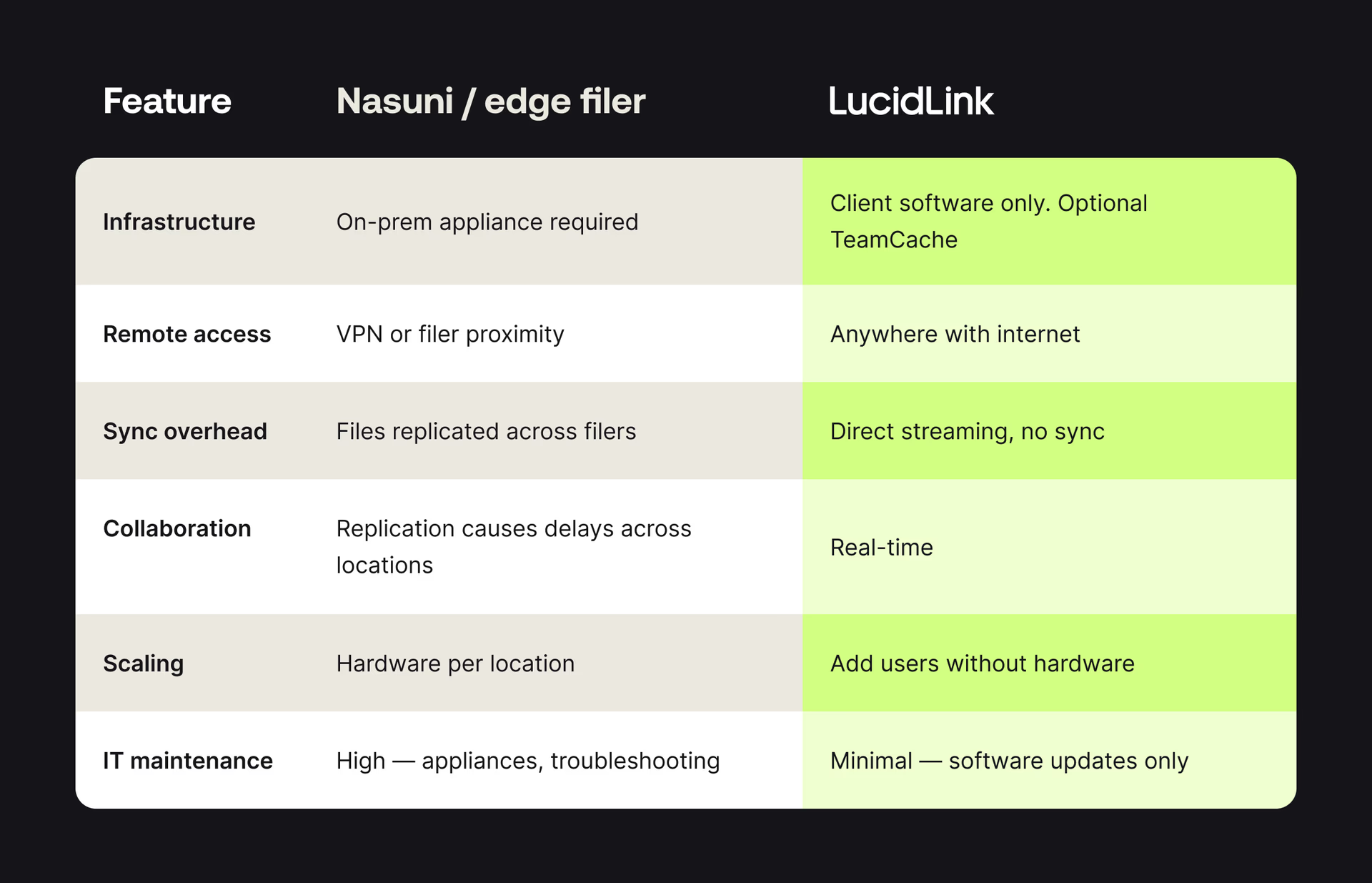
Why AEC firms are switching to Nasuni competitors
For many AEC firms, Nasuni and Panzura were stepping stones away from legacy NAS. But as teams became more distributed, those platforms stopped keeping up.
How Widseth lowered costs after replacing Nasuni
Challenge: large CAD and Revit files, multiple offices and rising infrastructure costs.
After moving to LucidLink, Widseth saw:
25% lower total cost compared to Nasuni
More usable storage without filer appliances
Reduced IT time spent managing edge infrastructure
Why Torti Gallas + Partners didn’t pick Nasuni or Panzura
Challenge: distributed CAD and BIM teams, VPN bottlenecks, work-from-anywhere mandate.
With Panzura and Nasuni we would still have had to VPN into the office which is sort of pointless. It didn't solve our work-from-anywhere initiative.” Omer Mushahwar, CTO
How BGE replaced VDI-level complexity
Challenge: high-performance access with VDI cost and overhead.
“LucidLink gives us VDI-level speed without VDI.” Jeremy Gaskins, Director of Technology Solutions
Stop adding middlemen and start streaming
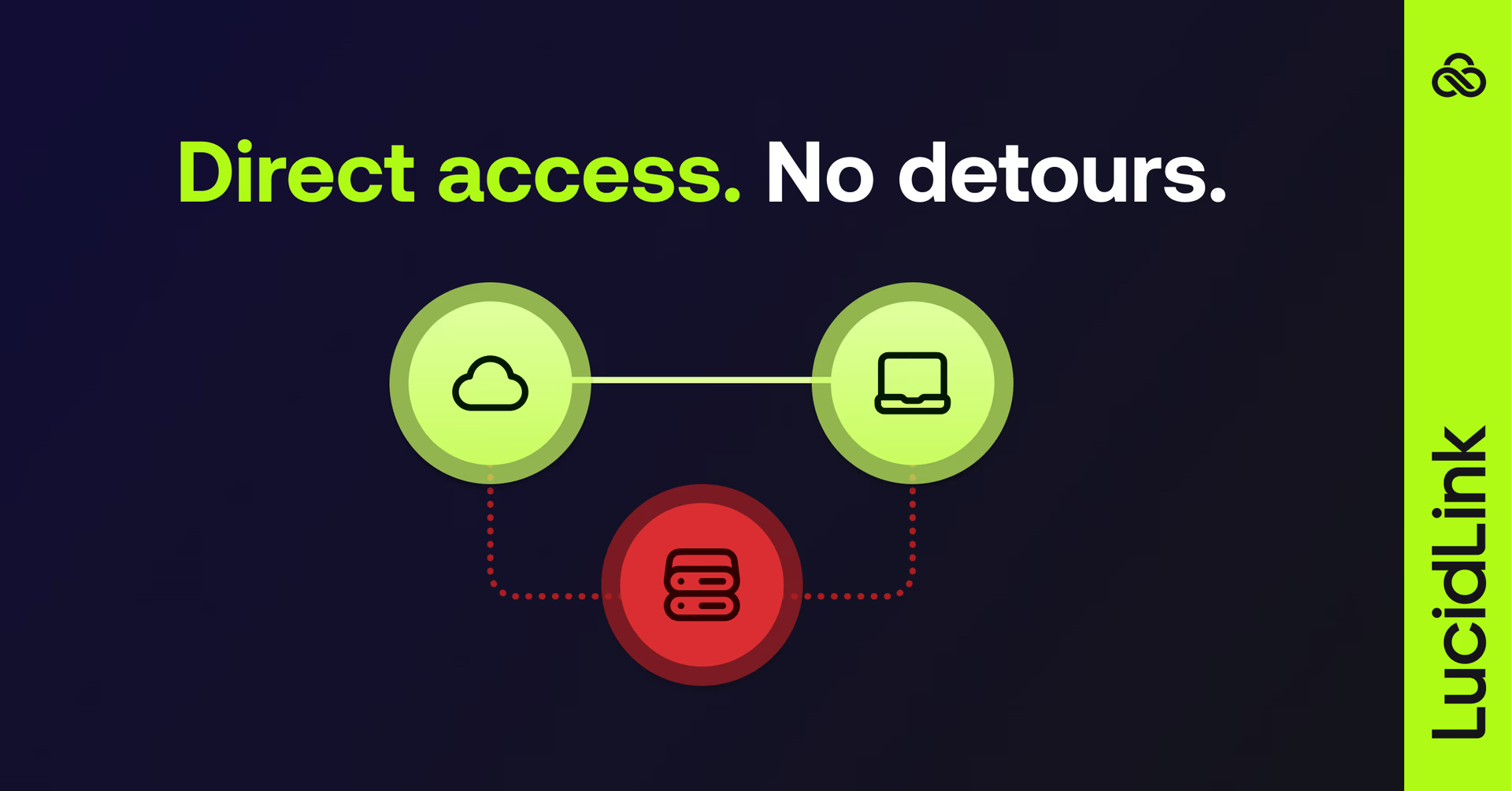
Nasuni and other edge filer platforms solved a real problem for their time.
But adding appliances, caches and sync layers to “fix” the cloud creates new bottlenecks — more hardware to manage, more points of failure and more friction for teams that need to work from anywhere.
LucidLink takes a different approach.
No filers, no VPNs and no sync delays. Just direct, secure access to your files in the cloud, streaming exactly what each person needs, when they need it.
For teams working with massive CAD, BIM, video, 3D or research files, cutting out the middleman makes the difference between stalled workflows and real progress.
If you’re exploring Nasuni competitors, see how LucidLink gives teams direct, secure cloud access to large files — try it free for 30 days.
FAQs
Teams search for Nasuni competitors when edge filer models start slowing them down. Large CAD, BIM, GIS or video files can bottleneck replication, VPNs add latency and scaling means more hardware. A true alternative streamlines access and supports real-time collaboration.
Keep reading

Cloud storage
New research: what your storage bill doesn’t tell you
New research from Situation Publishing explores the hidden costs around file infrastructure, from egress and duplication to lost time and manual work.
14 October 2026, 4 mins read
Product & news
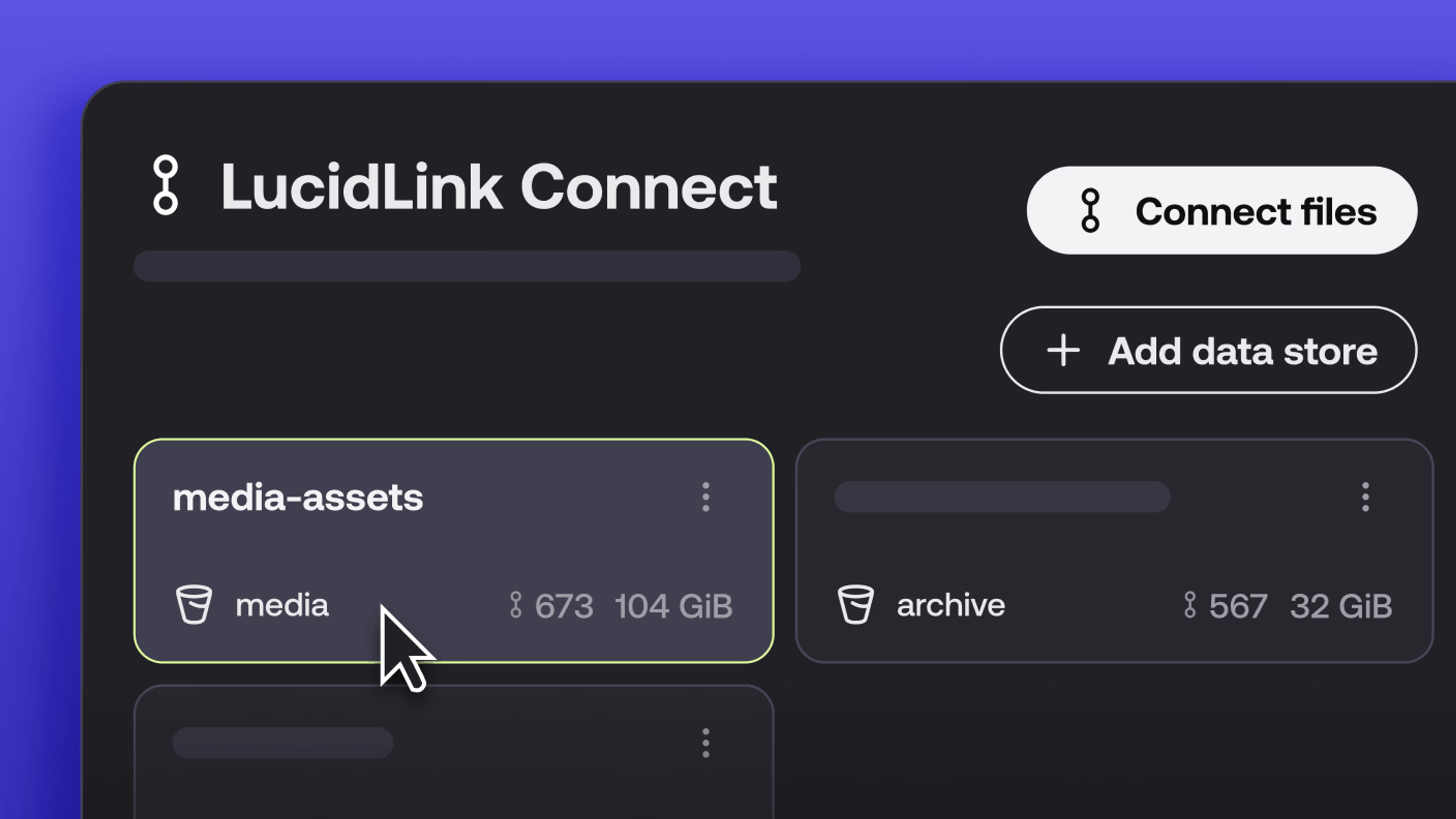
New in LucidLink Connect: simpler storage management
LucidLink Connect makes distributed storage easier to manage, with a new UI for connecting and managing data available through LucidLink.
06 October 2026, 2 mins read
In the field
Collaboration
Setting up AI agents for reality capture in AEC
How Diorama.studio used an AI agent connected to LucidLink to organize field data in real time, during a two-week deadline drone survey.
16 September 2026, 6 mins read
Join our newsletter
Get all our latest news and creative tips
Want the details? Read our privacy policy. Not loving our emails?
Unsubscribe anytime or drop us a note at support@lucidlink.com.