For developers
Shared memory for LangGraph agents
by Aleksandar Nedelchev,
Senior Software Engineer, LucidLink
Last updated 12 October, 2026
7 mins

Modern agent frameworks offer "shared memory", a way for multiple AI agents to read and write to a common store. Letta attaches a single memory block to many agents, Mem0 tags each write with a scope, and LangGraph's Store persists JSON documents by namespace and key.
In each of these cases, the underlying store is a database that the operator can read. The scope is a row or a policy inside that database, and the author of a memory is a tag the agent self-reports without any oversight.
What changes when the store is a LucidLink Filespace instead of a database? There's no server to run, and the filespace enforces scope and authorship instead of application code.
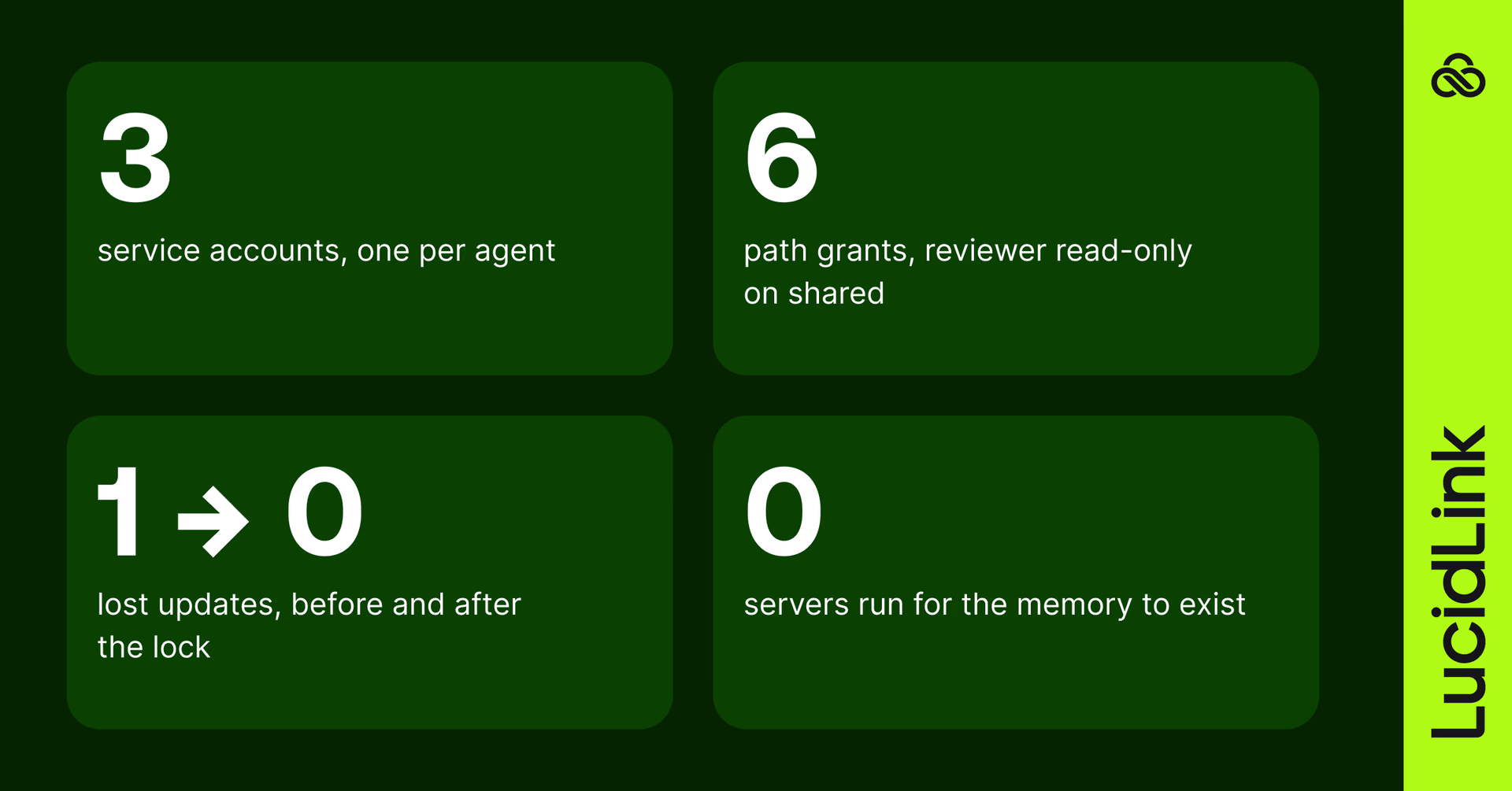
We built a shared memory and audit trail for 3 LangGraph agents to demonstrate how it works. Each agent has its own prompt, private directory, and service account for attribution in the logs. The adapter does no retrieval because LangMem or Mem0 sit on top of it unchanged. Everything below is verbatim from that run, with the complete working code on GitHub for anyone who wants to run it themselves.
lucidlink-mcp> read_audit_trail path_prefix=/memory time_range=10m # the run, 21:48:40–21:49:14, verbatim
21:49:10 agent-reviewer FileCreate /memory/agents/reviewer/f6f8a405-0ae2-4a47-a158-e64c1304d501.json
21:48:56 agent-analyst FileCreate /memory/shared/customers/63f40baa-cf31-43d4-959f-8fd83d0832c7.json
21:48:42 agent-researcher FileCreate /memory/shared/customers/aa1d774a-d700-48f7-9641-27f7f195cbdf.json
21:48:42 agent-researcher FileCreate /memory/shared/customers/a317684a-a4aa-4dc2-b98c-d257b6fca733.json
21:48:42 agent-researcher FileCreate /memory/shared/customers/a653d373-b941-42e0-b673-7bf88d5aa610.json
Three agents share one folder. Every write is attributed by the storage layer.
Setup
To set up the LucidLink Filespace as storage, we create a directory structure that follows LangGraph's namespace tuple and key model. The namespace tuple ("shared", "customers") maps to the /memory/shared/customers/ directory and its keys become files. At the same level as shared/ is an agents/ directory, with a private directory for each agent, similar to Mem0's scopes. The three agents are researcher, analyst, and reviewer.
/memory/
├── shared/customers/ # researcher and analyst write here, reviewer reads
└── agents/
├── researcher/ # private; the other two cannot list it
├── analyst/
└── reviewer/
Next we use directory permissions to set up scopes for the agents. Every agent gets a filespace service account with the collaborator role, with no access to anything until we explicitly grant it. We added six grants in total: researcher and analyst have read/write access to the shared/ directory, reviewer has read-only access to the shared/ directory, and all agents have read/write access to their own private directories:
Identity
Permissions
Path
/memory/agents/researcher
agent-researcher
read, write
/memory/shared
agent-researcher
read, write
/memory/agents/analyst
agent-analyst
read, write
/memory/shared
agent-analyst
read, write
/memory/agents/reviewer
agent-reviewer
read, write
/memory/shared
agent-reviewer
read
Before running the agents, we checked what each identity can see and do, to confirm the scopes. The researcher sees ['memory'] as the filespace root and no other top-level folders. It only sees ['researcher'] under /memory/agents. If the researcher tries to list /memory/agents/analyst, the list fails with FileNotFoundError: The path is invalid, the same error a nonexistent path gives, because the path itself is unreadable without the decryption key, not just access-denied. Writing to it fails the same way. If the reviewer writes to the /memory/shared/customers folder, the write fails with PermissionError: Authorization exception, but reads succeed.
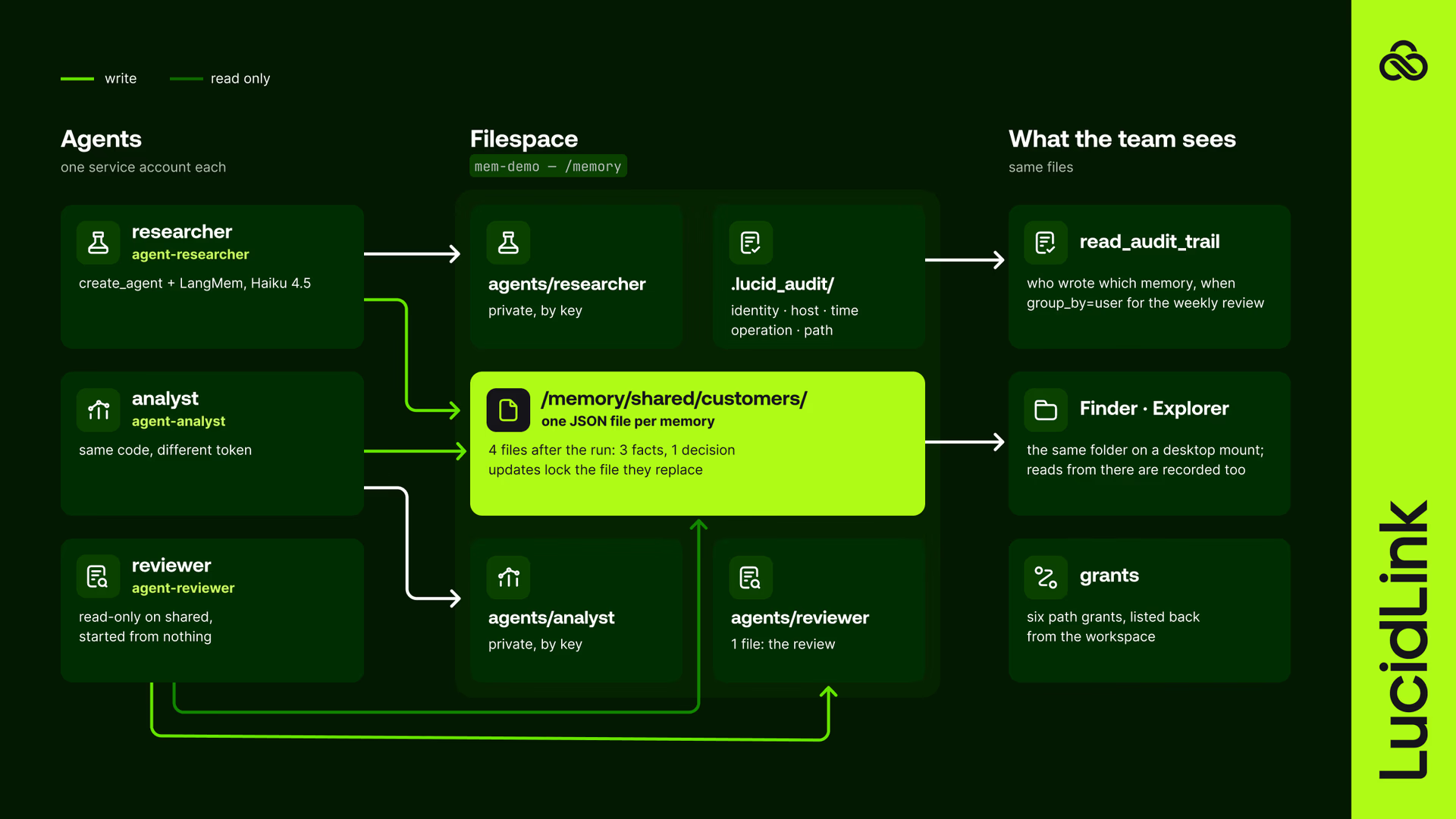
What ran. Three processes ran with three separate tokens and the same ~100 lines of Python. The filespace called mem-demo holds the memories. The directory permissions enforce the agents' scopes and the audit trail logs each operation with the agent that performed it.
The run
Each agent is a create_agent graph from LangChain that binds two or three LangMem tools to namespaces and points the store adapter at /memory. The agents use the Claude Haiku 4.5 model but any model works by configuring the LangChain provider:model string. The briefs in fleet_agent.py are the prompts we gave the agents. The tool calls are pulled from the log and the agent replies are trimmed only for length.
Brief to the researcher
You are the researcher on the Acme pricing project. Notes from today's call with Acme: they renewed early; procurement wants a single annual invoice; their fiscal year ends in March. Store what the fleet should remember about Acme in shared memory, one fact per memory, then reply with the keys you wrote.
Tool calls
manage_shared_memory(create, "Acme renewed their contract early.") → a317684a…
manage_shared_memory(create, "Acme procurement requires a single annual invoice.") → a653d373…
manage_shared_memory(create, "Acme's fiscal year ends in March.") → aa1d774a…
Аgent-researcher
I've stored three facts about Acme in shared memory for the fleet: a317684a… Acme renewed their contract early. a653d373… Acme procurement requires a single annual invoice. aa1d774a… Acme's fiscal year ends in March.
Brief to the analyst
First search shared memory for what the fleet already knows about Acme. Then record your proposal in shared memory as a decision: move Acme to the annual tier with a single invoice, pending review.
Tool calls
search_shared_memory(query="Acme") → 3 memories
manage_shared_memory(create, "DECISION: Move Acme to annual tier with single invoice, pending review. Aligns with their procurement requirement for single annual invoice and early renewal.") → 63f40baa…
Аgent-analyst
What the fleet already knows about Acme: renewed their contract early; procurement requires a single annual invoice; fiscal year ends in March. Decision recorded, key 63f40baa…: move Acme to the annual tier with a single invoice, pending review. This aligns with their stated procurement requirement and their early contract renewal.
Brief to the reviewer
You are the reviewer, new to the Acme pricing project, starting from nothing. Search shared memory for what the fleet knows about Acme and who proposed the pricing decision. You cannot write to shared memory; write your review to your own private memory.
Tool calls
search_shared_memory(query="Acme pricing project") → 4 memories
search_shared_memory(query="Acme pricing decision proposal") → 4 memories
manage_private_memory(create, "ACME PRICING REVIEW - REVIEWER NOTES …") → f6f8a405…
Аgent-reviewer
I relied on three shared memories: the DECISION record showing the proposal to move Acme to annual tier with single invoice pending review, the record that Acme renewed early, and the record that Acme's procurement requires a single annual invoice. The decision appears operationally sound given customer constraints, though I've noted in my private review that pricing impact and precedent implications warrant examination.
The response from the reviewer doesn't include who proposed the decision because that information isn't in any memory document. Rather than trust agents to self-report authorship with no oversight, the filespace itself tracks who created each document.
The audit trail
LucidLink can record every file operation with the timestamp, the identity of the performer, the operation, and the path in an encrypted log. A filespace administrator has to enable the audit trail globally first. The same audit trail supports the weekly cross-audit that shared-memory governance guides ask for.
This is the output read for /memory after the run:
Identity
Operation
Path
Time
21:48:42
agent-researcher
FileCreate
shared/customers/a653d373-….json
21:48:42
agent-researcher
FileCreate
shared/customers/a317684a-….json
21:48:42
agent-researcher
FileCreate
shared/customers/aa1d774a-….json
21:48:56
agent-analyst
FileCreate
shared/customers/63f40baa-….json
21:49:10
agent-reviewer
FileCreate
agents/reviewer/f6f8a405-….json
The reviewer couldn't see that the shared/customers/63f40baa… document was created by agent-analyst at 21:48:56. The workspace issued the identity, which isn't a field in the document. The trail doesn't show lock operations but it does show the writes they protect.
The collision
This collision test checks whether the shared memory loses data when two identities, researcher and analyst, write to the same file simultaneously. To ensure a race window, a barrier holds both identities until they're both ready, then releases them together to read the file. The test completes with a check of whether both facts land in the filespace. Although collision.py makes direct filesystem calls compared to fleet_agent.py, which uses the _put method from the LucidLinkStore adapter (lucidlink_store.py), it exercises the same locking mechanism that the adapter uses internally.
Two options exist for running the test: take one runs it without exclusive locks, and take two runs it with each identity using an exclusive lock through the read and write.
Take one: read, think, write, no lock
Both agents read the file, wait for one second, append a fact, and then write the file. Without a lock, the second write wins and overwrites the first write. Every run results in only one write landing in the filespace and the other one being lost, which is how a shared folder works without coordination.
Take two: exclusive open, read through the handle, write_file, close
Both agents use a lock. The first writer opens the file with an exclusive lock, which then blocks the second writer's attempt to open the file. Across five runs, the second writer waited between 1.31 and 1.46 seconds (including the first writer's one-second think), read the first writer's fact through its own locked handle and then appended to it. Both facts got to the filespace on every run.
Where this differs, and where it doesn't
This table compares LucidLink against four other approaches to agent memory: Letta's shared blocks, Mem0, LangGraph Store on Postgres, and managed memory services.
Letta shared blocks
Mem0
LangGraph Store on Postgres
Managed memory services
LucidLink Filespace
Can the operator read the memory?
Yes
Yes
Yes
Yes
No
How scopes are enforced
Block attachment
Scope tags and policy
Database roles
Cloud IAM
Keys; an unscoped agent can't list the folder
Who wrote it
agent_id tag
Scope tag
Not built in
Cloud identity
Workspace-issued identity, host, time, in the trail
Semantic retrieval
Yes
Yes
Optional
Yes
No; LangMem or Mem0 on top
Change notification
Server
Server
Poll or DB
Managed
Pull, seconds
Servers you run
Letta server
SaaS or self-host
Postgres
None, managed
None
A person in the same store
No
No
No
No
Yes, the mount
Memory sits next to the files it's about
No
No
No
No
Yes, same filespace
LucidLink is the only approach where the operator can't read the memory (first row). Other strengths are scope and attribution enforcement (second and third rows). The gap for the retrieval (fourth row) is because the adapter's search returns the namespace and ignores the query text, which works for four memories but isn't a search capability. This gap can be filled by putting an index like LangMem or Mem0 on top. Separately, the collision handling is at parity with Letta's validated replace and not a differentiator.
The code
The full example is lucidlink-agentic-examples/fleet-memory on GitHub: lucidlink_store.py, fleet_agent.py, collision.py, run_fleet.sh and a README with the setup.
lucidlink_store.py
The adapter, lucidlink_store.py, is one class over the Python SDK. LangGraph's BaseStore needs batch over four operation types. The update path follows the same pattern from the collision.py file.
def _write(self, path: str, value: dict[str, Any], created_at: str, updated_at: str) -> None:    doc = {"value": value, "created_at": created_at, "updated_at": updated_at}    self.fs.write_file(path, json.dumps(doc, ensure_ascii=False).encode())

def _put(self, namespace: tuple[str, ...], key: str, value: dict[str, Any] | None) -> None:    path = self._path(namespace, key)    if value is None:        with suppress(FileNotFoundError):            self.fs.delete(path)        return    self._mkdirs(namespace)    now = datetime.now(timezone.utc).isoformat()    try:        with self.fs.open(path, "r+b", lock_type="exclusive") as f:            created_at = json.loads(f.read()).get("created_at", now)            self._write(path, value, created_at, now) # write_file, not f.write: the audit trail attributes it    except FileNotFoundError:        self._write(path, value, now, now)

def batch(self, ops: Iterable[Op]) -> list[Result]:    results: list[Result] = []    wrote = False    for op in ops:        if isinstance(op, PutOp):            self._put(op.namespace, op.key, op.value)            wrote = True            results.append(None)        elif isinstance(op, GetOp):            results.append(self._get(op.namespace, op.key))        elif isinstance(op, SearchOp):            results.append(self._search(op))        elif isinstance(op, ListNamespacesOp):            results.append(self._namespaces()[op.offset : op.offset + op.limit])        else:            raise NotImplementedError(type(op).__name__)    if wrote:        self.filespace.sync_all() # make the writes visible to every other client    return results
fleet_agent.py
The agent script, fleet_agent.py, is identical for all three roles; only the service-account token and the brief differ. It links the adapter into a create_agent graph, binds the shared and private memory tools by namespace, and withholds the shared-memory write tool from the reviewer.
ROOT = "/memory"
SHARED = ("shared", "customers")
MODEL = os.environ.get("FLEET_MODEL", "anthropic:claude-haiku-4-5-20251001")
client, filespace = open_filespace(args.token_file or f"~/.lucidlink/agent-{args.role}.token")
store = LucidLinkStore(filespace, root=ROOT)
tools = [
create_search_memory_tool(namespace=SHARED, name="search_shared_memory"),
create_manage_memory_tool(namespace=("agents", args.role), name="manage_private_memory"),
]
if args.role != "reviewer":
tools.append(create_manage_memory_tool(namespace=SHARED, name="manage_shared_memory"))
agent = create_agent(init_chat_model(MODEL, temperature=0), tools, system_prompt=SYSTEM, store=store)
result = agent.invoke({"messages": [{"role": "user", "content": BRIEFS[args.role]}]})
Run it yourself
If you don't already have a LucidLink account, register for one and create a filespace.
Mint one service account per agent with the collaborator role, from the admin tools or the MCP server's admin toolset. Save each token as
~/.lucidlink/agent-<role>.token, mode 0600, and don't export it into the environment.Create the
/memorylayout and grant each identity its folders. Verify that directory listings from each identity are correct.Get the code from GitHub, run
pip install -r requirements.txt, and setLUCIDLINK_FILESPACEandANTHROPIC_API_KEY. For another model, install the corresponding LangChain package and setFLEET_MODELto itsprovider:modelstring.Enable the audit trail log. See this article: Audit Trail with New LucidLink.
Run
python collision.py take1, thentake2. The second take is meaningful only after the first.Run
./run_fleet.shfor the three agents, then read the audit trail.
Useful links
Keep reading
For developers
Put your metadata to work: getting started with the LucidLink MCP Server
Learn how to use the LucidLink MCP Server to query filespace metadata in plain language, then turn what you learn into repeatable workflows with Python.
01 September 2026, 9 mins read
Product & news
New in LucidLink Connect: simpler storage management
LucidLink Connect makes distributed storage easier to manage, with a new UI for connecting and managing data available through LucidLink.
06 October 2026, 2 mins read
In the field
Collaboration
Setting up AI agents for reality capture in AEC
How Diorama.studio used an AI agent connected to LucidLink to organize field data in real time, during a two-week deadline drone survey.
16 September 2026, 6 mins read
Join our newsletter
Get all our latest news and creative tips
Want the details? Read our privacy policy. Not loving our emails?
Unsubscribe anytime or drop us a note at support@lucidlink.com.