Collaboration
Cloud storage
Product & news
File streaming vs edge filers: eliminating the middleman
Last updated 05 January, 2026
5 mins

Every middleman promises to make things easier. The truth is often different.
Edge filers are pitched as the bridge between local performance and cloud scale. Cache your files on-prem, sync changes back to the cloud and get the best of both worlds — local speed and cloud accessibility.
In reality, this bridge often becomes a new bottleneck consisting of expensive hardware, fragile syncs and collaboration that remains tied to locations.
This piece explores where edge filers fall short and how file streaming eliminates the middleman entirely, giving teams instant, direct access to cloud data from anywhere.
The edge filer premise
Edge filers were designed to solve a real problem: cloud storage was cheap and scalable, but too slow for real work. Local storage was fast but isolated.
The edge filer solution is to cache frequently accessed files on local appliances, sync changes back to the cloud automatically and give everyone the speed of local storage with the safety of cloud backup.
Common platforms include Nasuni, CTERA, Hammerspace, Panzura, Egnyte and Blackmagic Cloud Store. (Some of these platforms are also called storage gateways, depending on architecture and deployment model.)
Edge filers are typically deployed in hybrid environments to:
Provide low-latency access to active files via on-prem caching
Synchronize cloud and local storage for business continuity
Consolidate storage systems under a unified namespace
For teams where everyone is in the same office and workflows are predictable, edge filers can still work well. But as teams go global, datasets grow and real-time collaboration becomes critical, the cracks start to show.
Where edge filers fall short: the gateway bottleneck
Edge filers are meant to eliminate cloud latency. But in practice they often create more problems than they solve.
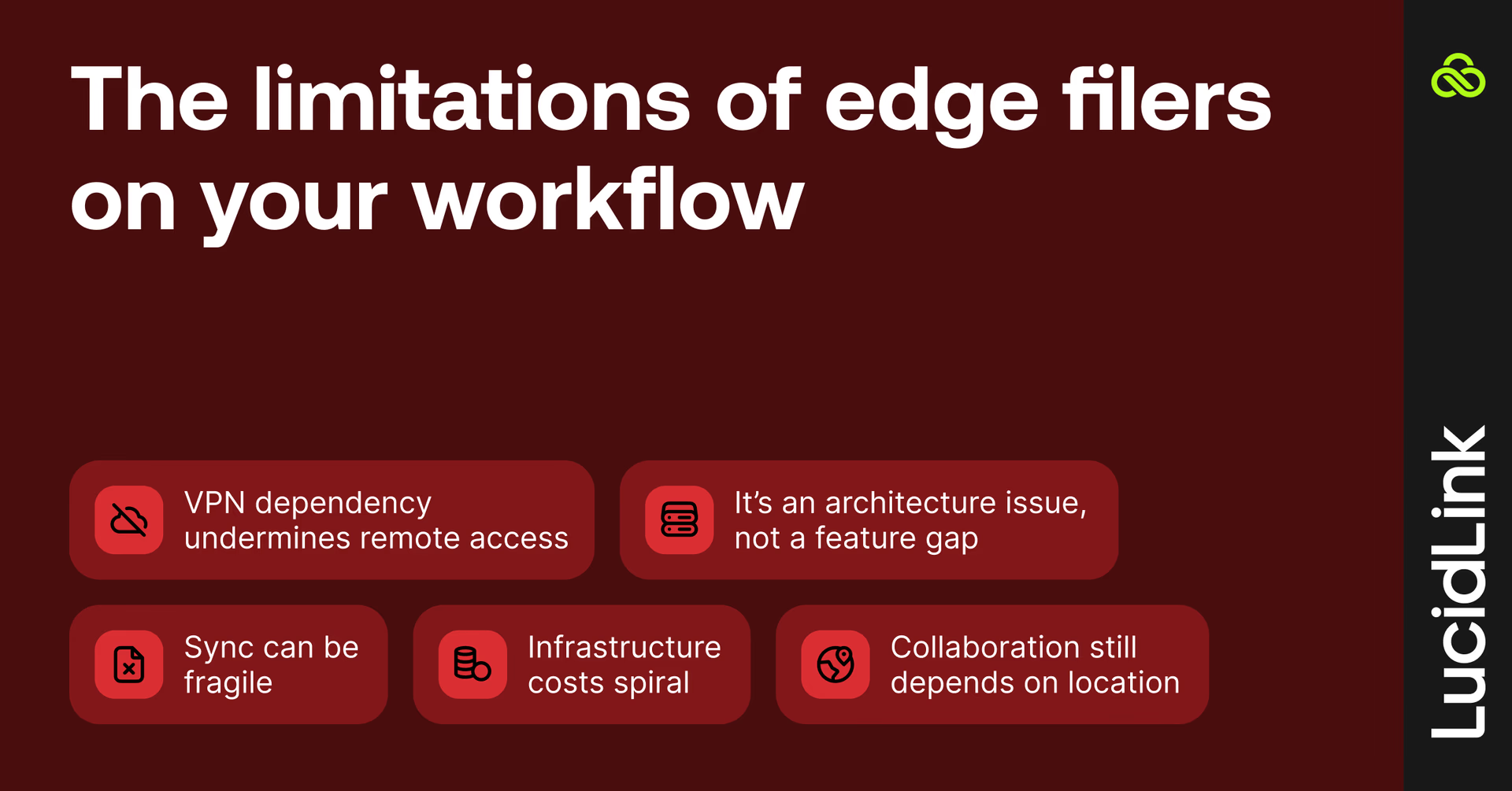
Infrastructure costs spiral
Every new office needs its own appliance. That's another filer to spec, ship, install and maintain, every time you grow, the result is:
Physical appliances at each location
Ongoing maintenance, support contracts and hardware refresh cycles
IT must deploy, maintain and troubleshoot hardware everywhere
Costs multiply with team growth and additional sites
When Widseth evaluated their edge filer setup, the math was simple.
We saved 25% by moving to LucidLink — and we got more storage. That made the CFO conversation easy.
Brent Morris, IT Manager, Widseth
VPN dependency undermines remote access
Edge filers promise remote access, but the reality is more complicated. To access files outside the office, remote workers typically need VPN connections to the filer.
This means:
More VPN infrastructure and licensing costs
Latency through VPN tunnels
Security vulnerabilities and access management overhead
IT burden managing VPN credentials and troubleshooting connections
As Omer Mushahwar, CTO at Torti Gallas + Partners, discovered when comparing solutions:
With Panzura and Nasuni we would still have had to VPN into the office which is sort of pointless. It didn't solve our work-from-anywhere initiative.
Omer Mushahwar,CTO, Torti Gallas + Partners
Sync can be fragile
The more locations you add, the more fragile the whole system becomes.
Failed syncs create version conflicts
Updating files often triggers full re-uploads across sites
Multi-filer setups dramatically increase complexity
One broken sync can mean lost work and broken workflows
Collaboration still depends on location
Edge filers promise remote access, but the reality is more complicated.
Access speed depends on proximity to the filer
Remote workers experience lag or limited access
Teams are tethered to physical infrastructure
True distributed collaboration remains out of reach
It’s an architecture issue, not a feature gap
You wanted the freedom of the cloud. Instead, you got the constraints of on-prem infrastructure, just in more places.
Adding infrastructure to “fix” cloud latency only introduces new failure points, higher costs and workflow friction. They’re fundamental limitations of putting hardware between users and their data. With today's technology, that middleman simply isn't necessary.
Cut out the middleman with file streaming
Teams don’t need more infrastructure to fix the cloud, they just need a faster path to it.
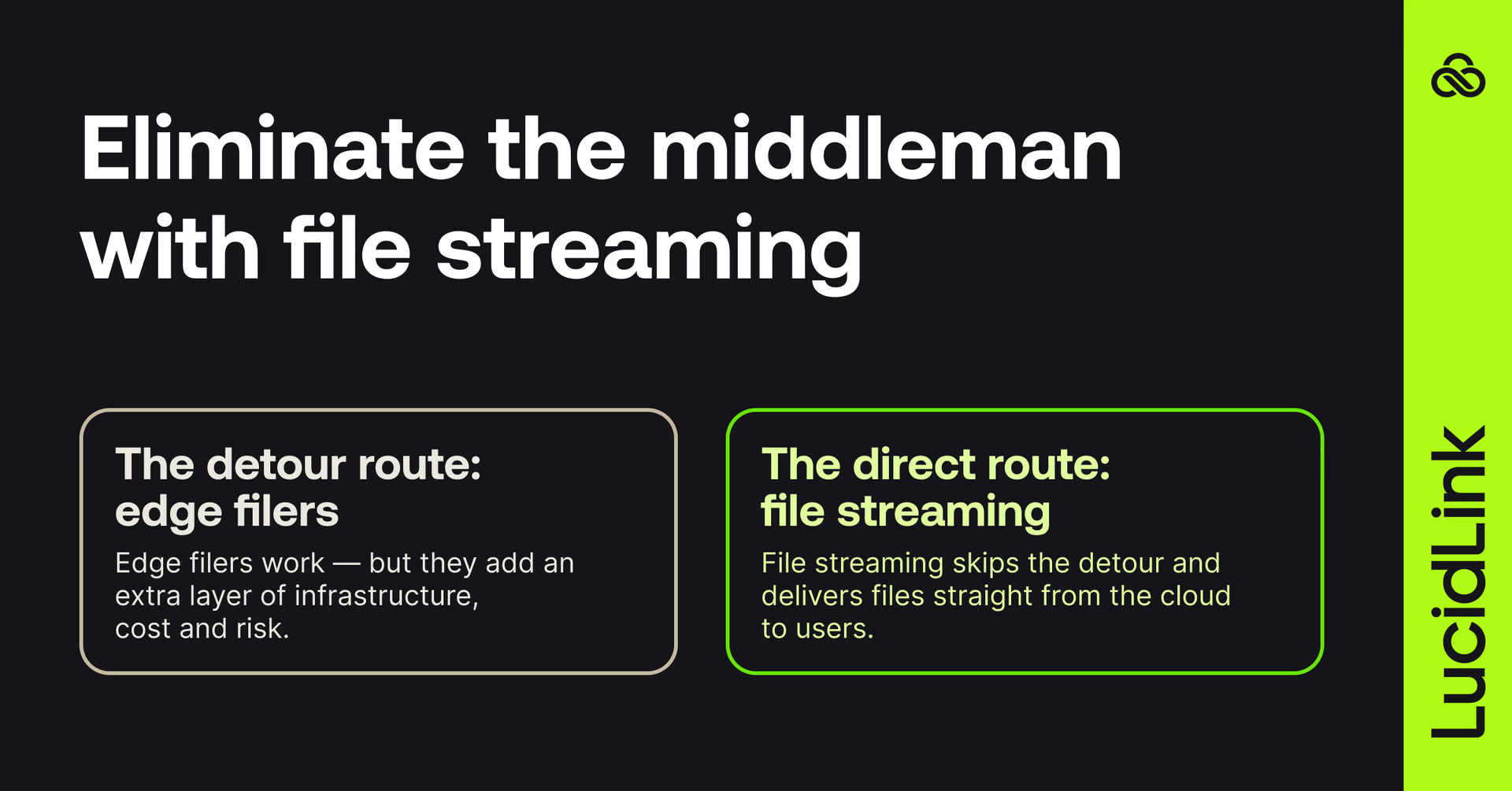
With edge filers, your files take a detour: cloud → filer → users. It works, but adds cost, complexity and another point of failure.
File streaming takes the direct route: cloud → users (with a smart cache on each device).
Instead of bouncing files through a central appliance, data comes straight from the cloud to each user’s device, streaming only what’s needed, right when it’s needed.
There’s no syncing, staging or waiting for updates to trickle through a central box in someone’s server room.
The result?
No middle layer to maintain
No duplicated files hogging storage
Lower costs
No lag, just instant file access, anywhere your team works.
How LucidLink works
LucidLink is file streaming built for the cloud era.
We asked, what if the cache didn't need to live in a rack somewhere? What if it could live on each user's device — smarter, more distributed and infinitely more flexible?
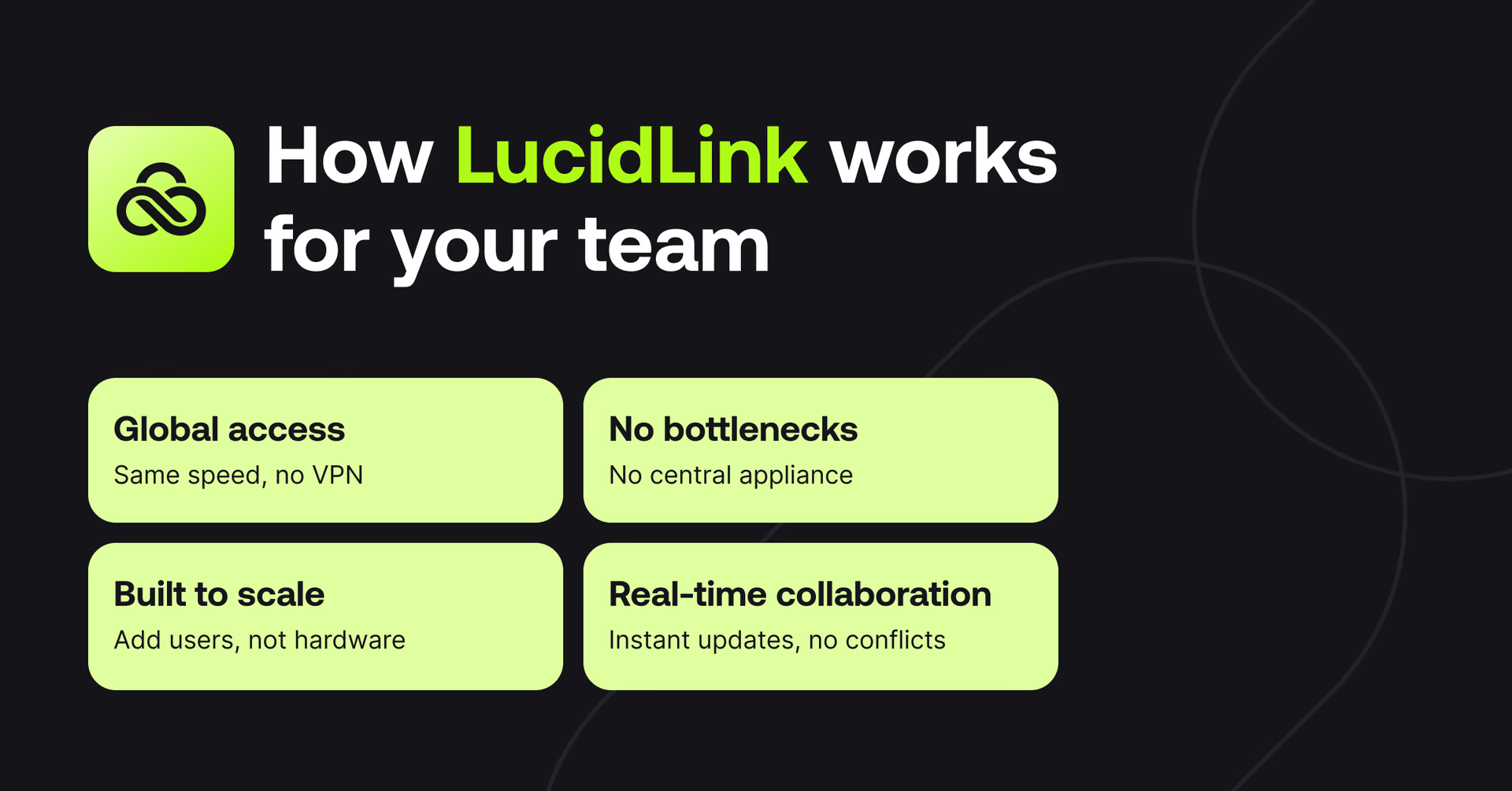
The result is fast, secure access to shared data from anywhere, with no hardware and no friction.
No on-prem hardware required: forget about racks of appliances or storage gateways. LucidLink connects your team directly to your cloud storage.
Smart caching built in: each user has a local cache managed by the LucidLink client, so files open instantly and stay up to date automatically.
Effortless setup: IT doesn’t need to deploy or maintain anything complex — just install the client, log in and start working.
TeamCache for shared environments: for teams working from the same location, LucidLink’s optional TeamCache boosts local performance, while maintaining smooth global collaboration and our zero-knowledge security model.
What it means for your team
Global access: work from anywhere with the same seamless performance. No VPN needed, no matter how far you are from “HQ.”
No centralized bottleneck: each user’s smart cache means there’s no single appliance slowing things down or waiting to sync.
Built to scale: add users, not hardware. Growth is as simple as installing another client.
Real-time collaboration: everyone works from the same cloud data in real time. Updates appear instantly — no re-syncs, no version conflicts, no “who has the latest file?” drama.
For Torti Gallas + Partners, the decision was clear after considering all the major players.
“We looked at Panzura and Nasuni and all the big collaboration platforms like Box and Dropbox and nothing fit all of our needs. A lot of them didn’t work with all of our file types, for example linking to CAD files."
“With Panzura and Nasuni we would still have had to VPN into the office which is sort of pointless. It didn’t solve our work-from-anywhere initiative. The decision to go with LucidLink was a no-brainer,” Omer Mushahwar, CTO at Torti Gallas + Partners."
Edge filers vs. LucidLink file streaming
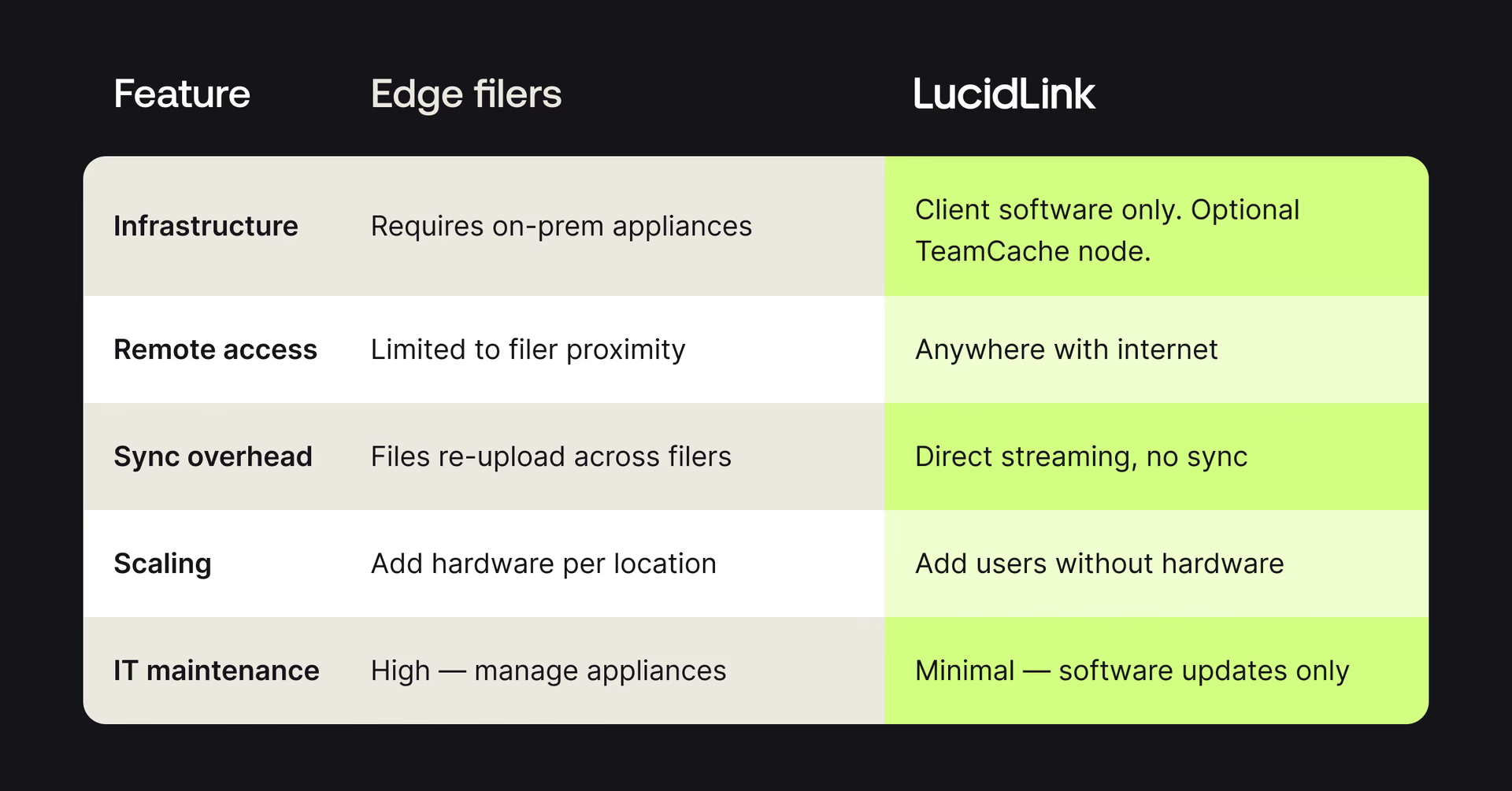
Why add a middleman when you can stream directly?
Edge filers solved a problem of their era: giving teams low-latency access to cloud files. But as workflows go global and files grow massive, that solution creates more problems than it solves.
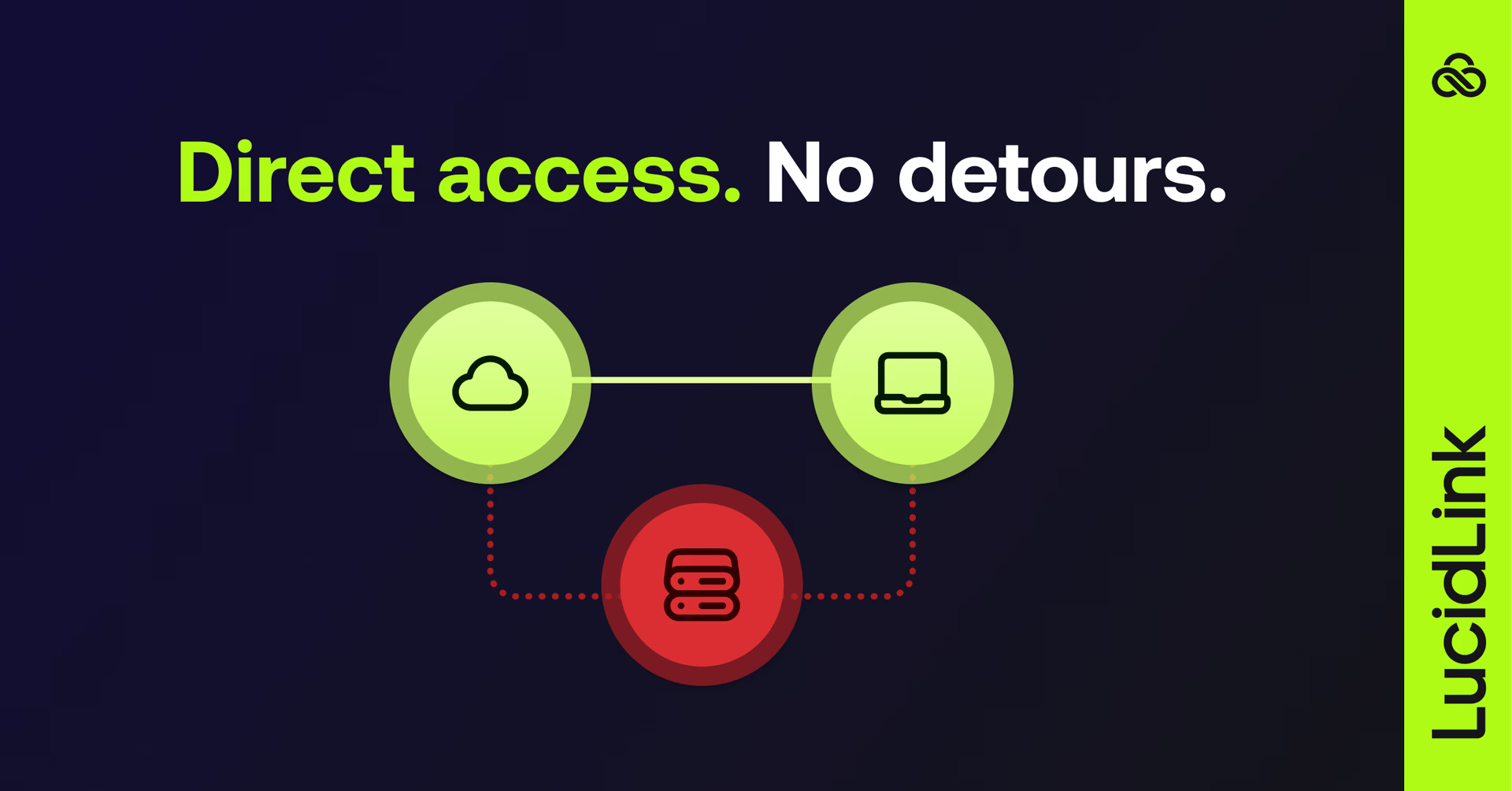
File streaming eliminates the middleman entirely. Teams no longer purchase hardware, manage appliances, troubleshoot sync or juggle versions. You just open the file and start working, directly from the cloud.
The big wins with LucidLink:
Work instantly: open huge files without waiting
Collaborate seamlessly: multiple team members edit the same files in real time
Stay aligned: one source of truth, zero version conflicts
Simplify IT: no appliances, no babysitting syncs
Scale effortlessly: add users or offices without disruption
We thought it almost seemed too good to be true. Performance is as good as VDI, without the cost.
Jeremy Gaskins,Director of Technology Solutions, BGE
The future of collaboration isn't adding infrastructure between teams and your files. It's eliminating the distance altogether.
Ready to eliminate the middleman? Try LucidLink free for 30 days or book a demo.
Keep reading

For developers
Product & news
A dashboard for your filespace, built where your keys are
Build a dashboard for your LucidLink filespace from its audit trail with an agent skill for Claude Code and Codex, without touching zero-knowledge encryption.
19 October 2026, 4 mins read

Cloud storage
New research: what your storage bill doesn’t tell you
New research from Situation Publishing explores the hidden costs around file infrastructure, from egress and duplication to lost time and manual work.
14 October 2026, 4 mins read
Product & news
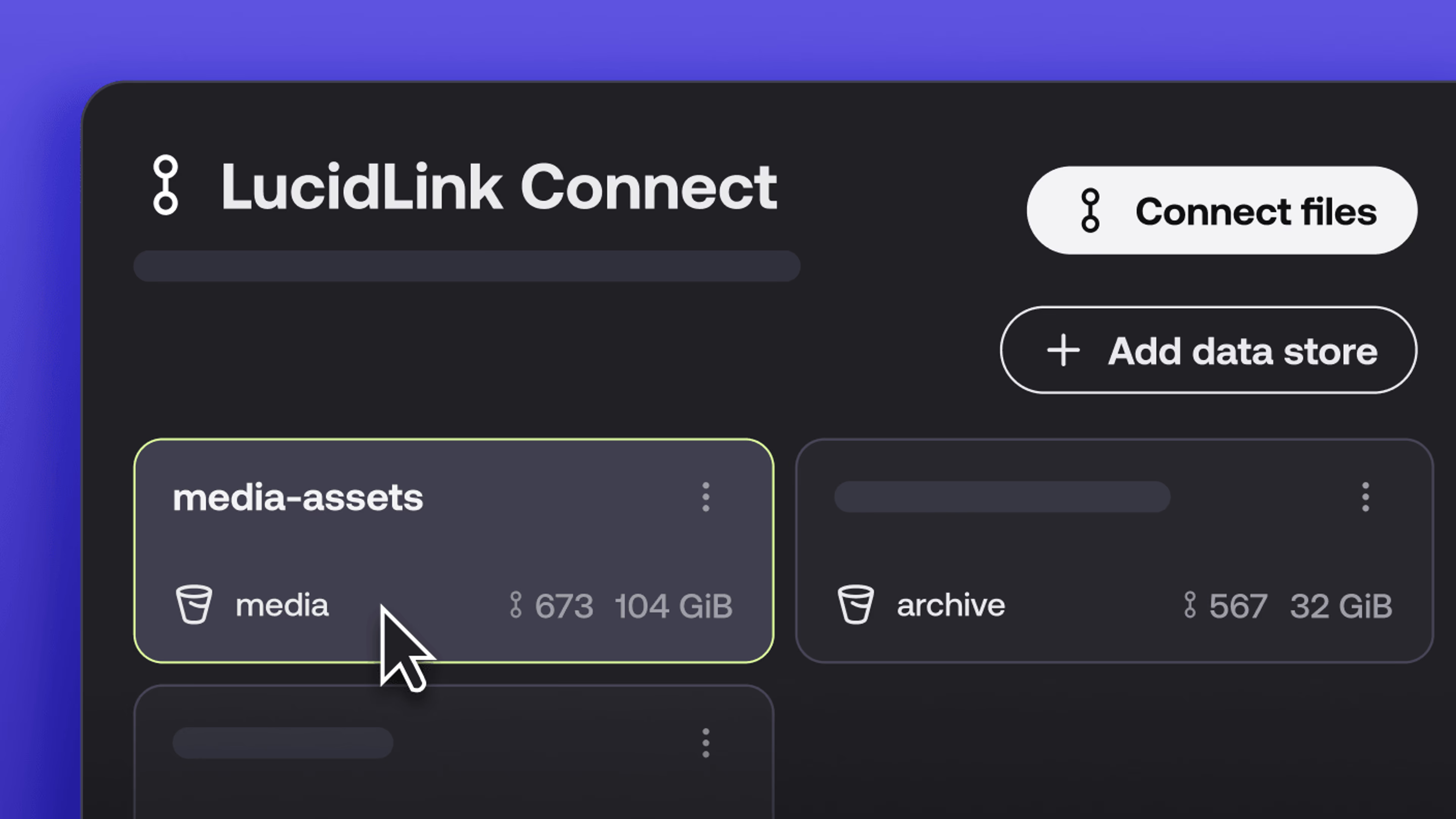
New in LucidLink Connect: simpler storage management
LucidLink Connect makes distributed storage easier to manage, with a new UI for connecting and managing data available through LucidLink.
06 October 2026, 2 mins read
Join our newsletter
Get all our latest news and creative tips
Want the details? Read our privacy policy. Not loving our emails?
Unsubscribe anytime or drop us a note at support@lucidlink.com.