Cloud storage
New research: what your storage bill doesn’t tell you
Last updated 14 October, 2026
4 mins

Storage costs are easy to see.
You know what you’re paying per terabyte. You can see when hardware is reaching capacity and when a refresh is coming.
It’s harder to measure everything happening around that storage.
New research from Situation Publishing, based on a survey of more than 180 technology professionals, found that inefficiencies often show up in the way people access, move and work with files.
And that can make apparently affordable storage more expensive to run than the headline cost suggests.
Cost per terabyte is only the starting point
When IT teams assess file infrastructure, storage cost is an obvious place to start.
But it doesn’t show what happens around that storage:
How often data is copied or transferred
How long users wait for access
How much supporting infrastructure is needed to keep work moving
The research argues that IT and operational leaders need to look at these broader pieces together.
As LucidLink’s Alex Ferris puts it in the report: it’s easy to see how much storage you’re using and what it costs, but the real opportunity is often in “the things that happen around storage.”
The hidden costs around storage
Some of those costs are easy to miss because they don’t sit neatly on your storage invoice.
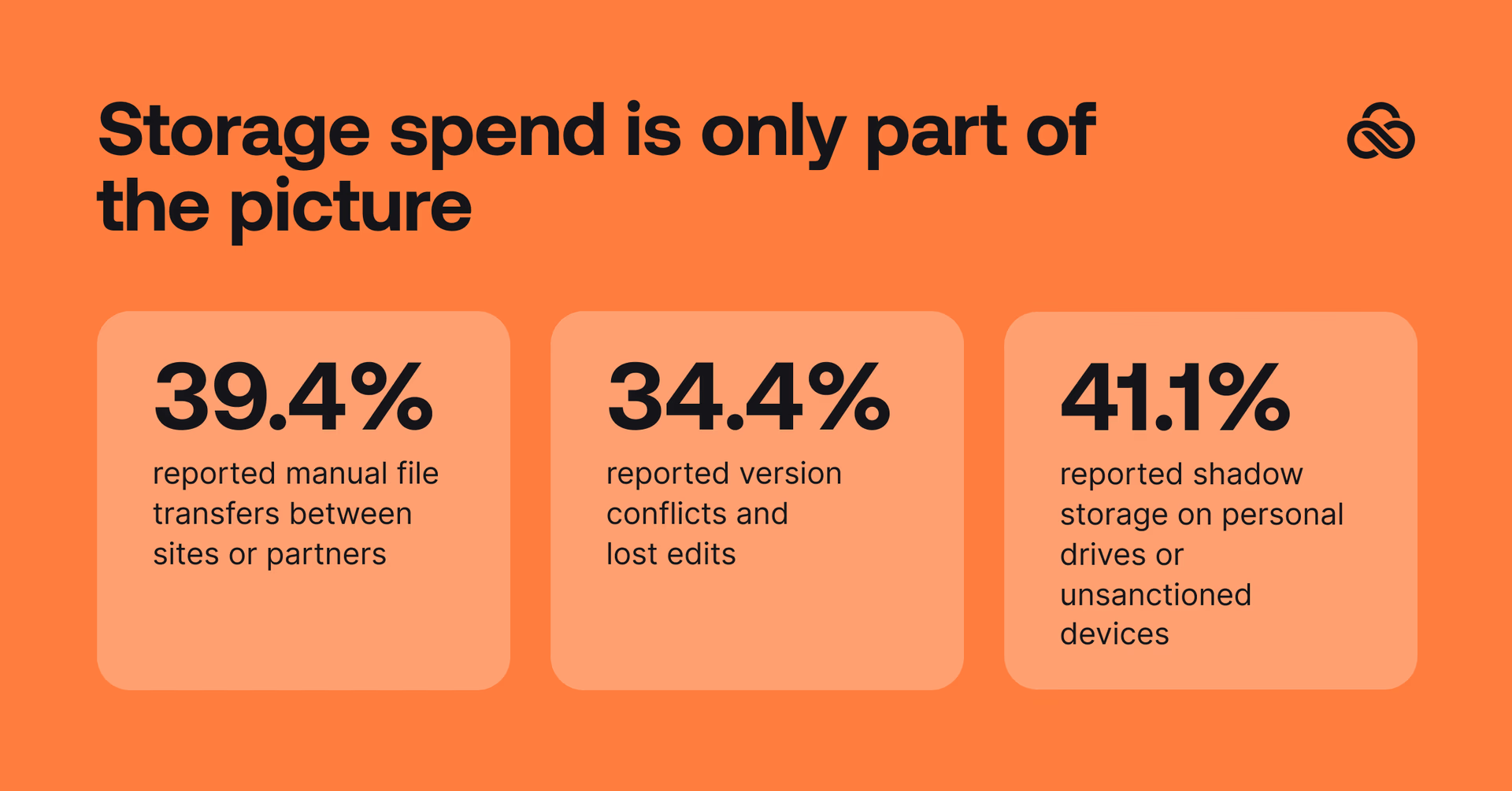
Manual movement: 39.4% of respondents reported manual file transfers between sites or partners as a symptom of degrading infrastructure. Every transfer adds time, operational effort and another opportunity for copies to multiply.
Version conflicts and lost work: 34.4% reported version conflicts and lost edits. Those problems rarely show up as a storage cost, but they can mean rework, delays and uncertainty about which file is actually current.
Data movement and egress: cloud storage can be cheap to hold and expensive to use. Every download, cross-region transfer, sync cycle or repeated access can add outbound data charges. For distributed teams working with large files, those egress costs can build quickly.
Duplication: different offices and teams can end up storing overlapping copies of the same data. One LucidLink engineer quoted in the report describes organizations thinking they have separate petabytes across offices when much of it is actually the same content duplicated in different places.
Shadow storage: 41.1% reported personal drives or unsanctioned devices. That can be a sign that people are solving access problems themselves because the official workflow is too slow or awkward. Shadow IT is also a gateway to security risks and higher potential costs.
Taken in isolation these symptoms aren’t necessarily signs your storage system is broken (although they’re not ideal). But they do mean the real cost of using that storage is much higher than the number you see on the bill.
The price of waiting
The report uses EVS Engineering as an example.
As the firm grew from 30 engineers to 200 across multiple offices and time zones, it continued using office-based file servers over VPN. Large AutoCAD files started taking five to ten minutes to open or save. The obvious infrastructure response was an $80,000 SAN upgrade.
Instead, EVS moved to cloud file streaming.

File access dropped to under 30 seconds and the SAN upgrade was avoided. More importantly, the company estimated it recovered around 200 billable engineering hours every month.
A simple storage-cost comparison can easily miss that huge operational saving.
Build the business case across both budgets
Technology teams tend to see hardware, capacity, cloud spend and support.
Operational teams feel waiting, transfers, rework and lost billable time.
Looking at one without the other gives you an incomplete number. So, the research makes a strong case for assessing both together. That means asking questions like:
How long do people wait to open or save large files?
How much are you spending on data transfer and egress?
How much data is duplicated across offices, systems or teams?
How often are files moved manually between locations or partners?
How much time is lost resolving version conflicts or rebuilding work?
What VPN, VDI, edge or replication infrastructure exists mainly to make remote access workable?
How much IT time goes into keeping the current setup running?
These questions get you much closer to the real cost of your file infrastructure than cost per terabyte on its own.
Access changes the economics
The research points to a broader shift: efficient access for people and systems matters as much as where files are stored.
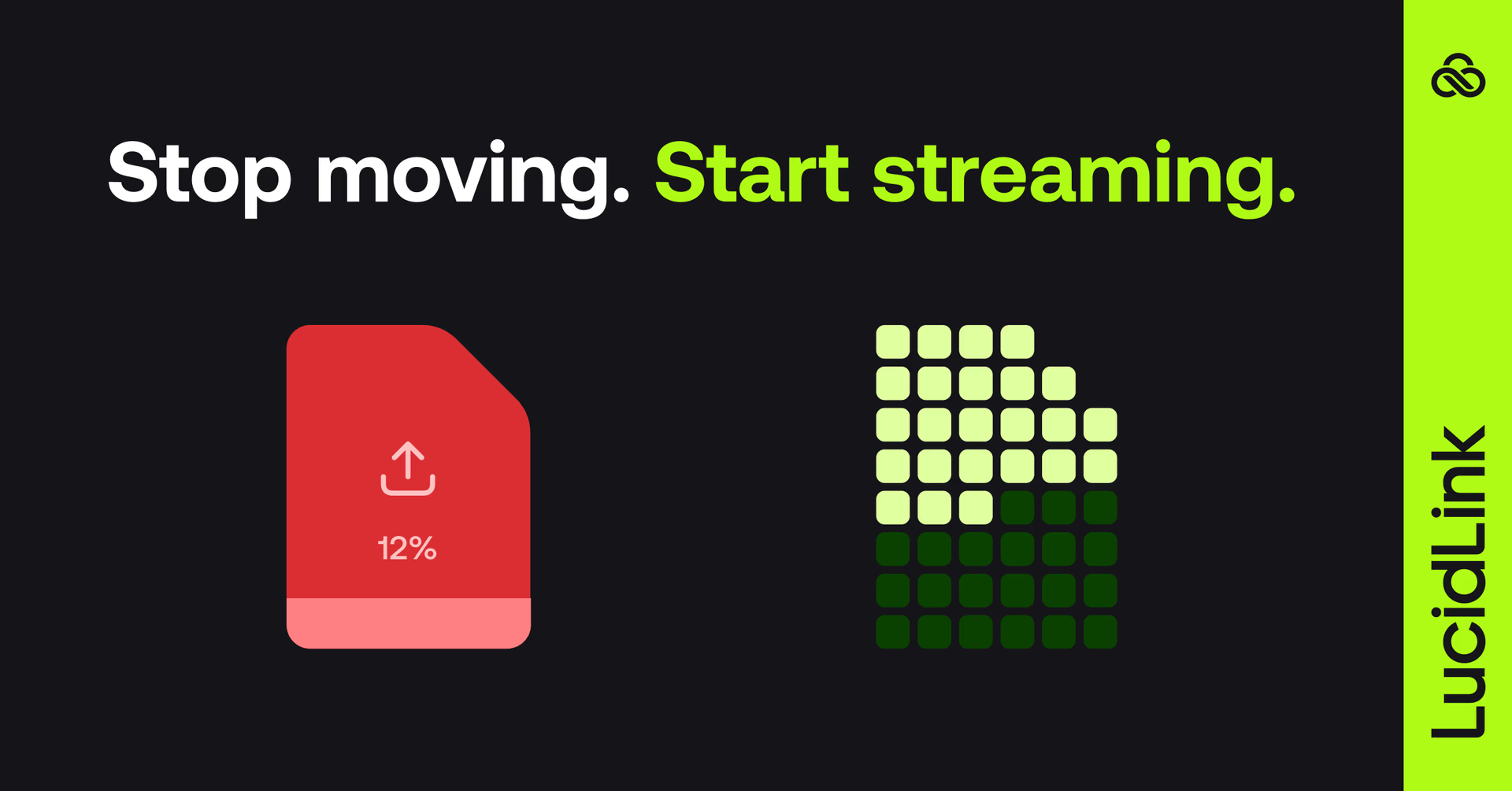
File streaming is one example of that change. Instead of copying or downloading entire files before work can start, users access the parts they need on demand from a central source.
While storage price is still an important factor, it only tells you what it costs to keep your data.
A more holistic calculation also needs to consider what it costs to access that data, move it, duplicate it and wait for it. Once you include those costs, the economics can look very different.
Download the full Situation Publishing report, Access, not storage: moving to next generation file infrastructure, for the complete survey findings and commentary.
Keep reading
Cloud storage
Introducing the new LucidLink MSP: one platform for your whole book
LucidLink MSP runs on the LucidLink Management Platform, giving MSPs centralized deployment management and pricing that scales with growth.
09 September 2026, 2 mins read

Product & news
Cloud storage
Beyond headline speeds: what cloud file streaming needs to succeed
Block-level streaming, smart prefetching and metadata coordination: here's the architecture behind how LucidLink performs on standard internet connections.
05 August 2026, 6 mins read

Product & news
Cloud storage
Why cloud storage speed claims don't reflect reality
Many cloud storage vendors promise 20Gbps+ speeds. Here's why those numbers rarely match real-world performance, and what to look for instead.
30 July 2026, 5 mins read
Join our newsletter
Get all our latest news and creative tips
Want the details? Read our privacy policy. Not loving our emails?
Unsubscribe anytime or drop us a note at support@lucidlink.com.