Cloud storage
LucidLink security explained: zero-knowledge encryption for IT teams
Last updated 08 June, 2026
7 mins

Most file access solutions for remote and hybrid teams force IT into a choice between security and ease of use.
Lock down security and workflows can slow to a crawl. Teams build workarounds, copy files and use unsanctioned tools.
Prioritize convenience and control starts to slip. Data spreads across devices, governance weakens and breaches become more likely.
Either way, risk accumulates.
Traditional cloud file access solutions compound the problem. Files spread across devices, VPNs create bottlenecks and access control becomes an ongoing IT burden.
LucidLink removes the trade-off with a cloud-native file streaming platform built for secure access at enterprise scale. Rather than treating security and ease of use as opposing forces, we built them into our architecture.
Zero-knowledge security: how it works in practice
The foundation of LucidLink’s architecture is a zero-knowledge security model.
Our filespace is designed so that no one, including LucidLink, can access your encryption keys or decrypt your data.
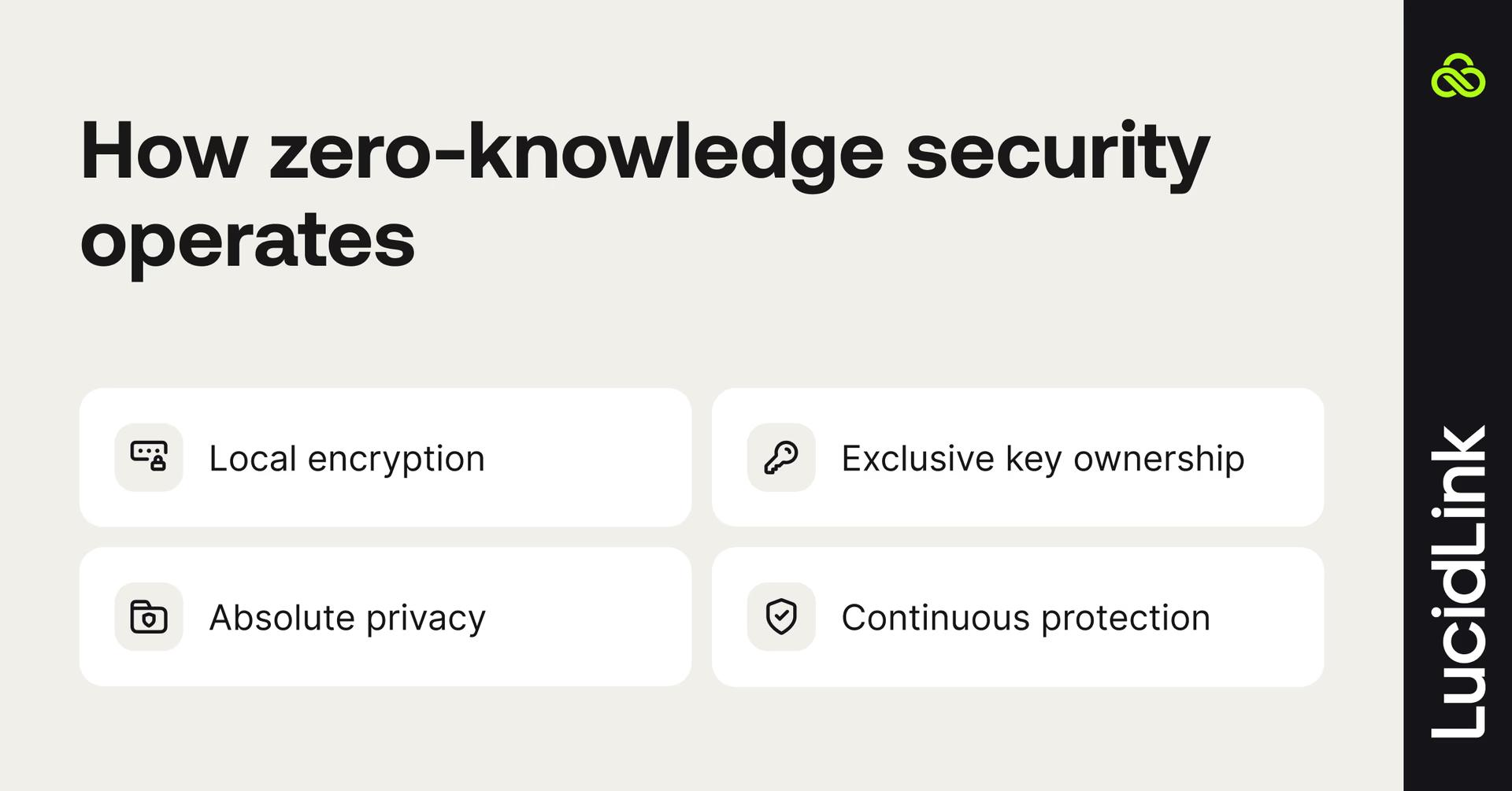
Here's how it works:
Data is encrypted on your device before it leaves your machine
Encryption keys are generated and controlled by the customer, not LucidLink or the storage provider
Only you hold the decryption keys: neither LucidLink nor your storage provider can read your files
Data remains encrypted in transit and at rest: your cloud storage provider only stores encrypted blocks
This differs from standard server-side encryption models, where providers retain access to encryption keys and therefore the data itself.
Whether you use AWS, Azure or another provider, with LucidLink, storage providers have no visibility into your content. The storage layer is trusted for durability and uptime, never for data access.
What this means for vendor security assessments
Questions about provider access to data, encryption key management and data sovereignty have clean, verifiable answers. LucidLink can’t access your data. That simplifies procurement, audit and compliance workflows significantly.
An important note on zero-knowledge security
Because LucidLink can’t access your encryption keys, password recovery works differently from standard cloud platforms.
We can’t reset your password or retrieve files on your behalf. Instead, users can generate a backup code in advance, stored securely by the user, which provides a recovery path while preserving the integrity of the zero-knowledge model.
Why file streaming changes the security model

Traditional sync-and-share tools create a security problem that encryption alone doesn't solve: file sprawl.
Data is replicated across devices and often copied again to unmanaged locations or unauthorized devices. Each copy is a potential exposure point you can’t fully govern.
The risk compounds quickly:
A lost laptop exposes a full project
A contractor's personal machine retains copies long after their engagement ends
A former employee's device holds data that should have been inaccessible from day one
Each additional endpoint is a potential breach point
Tracking down and removing copies after the fact is time-consuming, error-prone and often incomplete.
LucidLink's file streaming access model significantly reduces the attack surface created by widespread file replication.
By default, LucidLink streams only the specific data blocks an application actively needs. Files are not replicated to endpoints unless intentionally pinned for offline access.
Reducing residual data exposure
With LucidLink, revoking access immediately cuts off access to the filespace and any streamed data. Any temporarily cached data is fully encrypted and inaccessible if a device is disconnected from the filespace.
A freelance editor finishing a confidential project loses access the moment you remove their permissions. The same applies to contractors, temporary staff, employees on BYOD policies and anyone accessing files from unmanaged endpoints.
For IT teams managing distributed workforces with high contractor turnover, this significantly reduces residual data exposure compared to traditional sync-based file systems.
File-level encryption with isolated keys
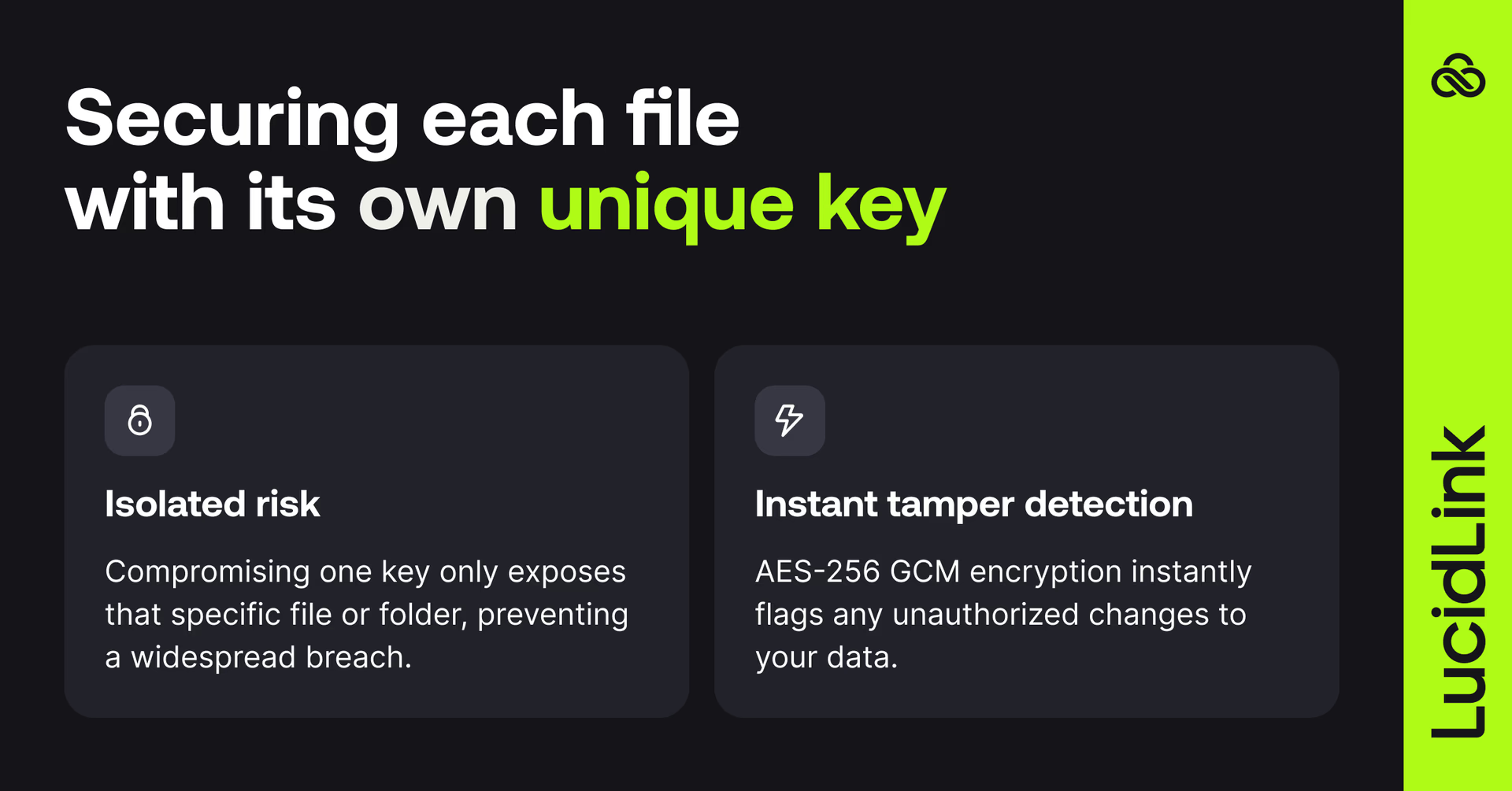
LucidLink's architecture separates metadata and data while fully encrypting both. Every file and folder has its own unique encryption key. Keys are invisible and managed automatically, giving teams the assurance every file is protected, without adding complexity to workflows.
Why this matters:
Reduced blast radius: if a single key is exposed, it affects only that file or folder, not the entire filespace. Risk is isolated rather than cascading.
Tamper detection: LucidLink uses AES-256 in GCM mode, a form of authenticated encryption that detects unauthorized changes. Any tampering with files at the storage layer is caught immediately.
For compliance environments where data integrity is as important as confidentiality, this provides verifiable assurance that accessed data is genuine.
Access governance at scale
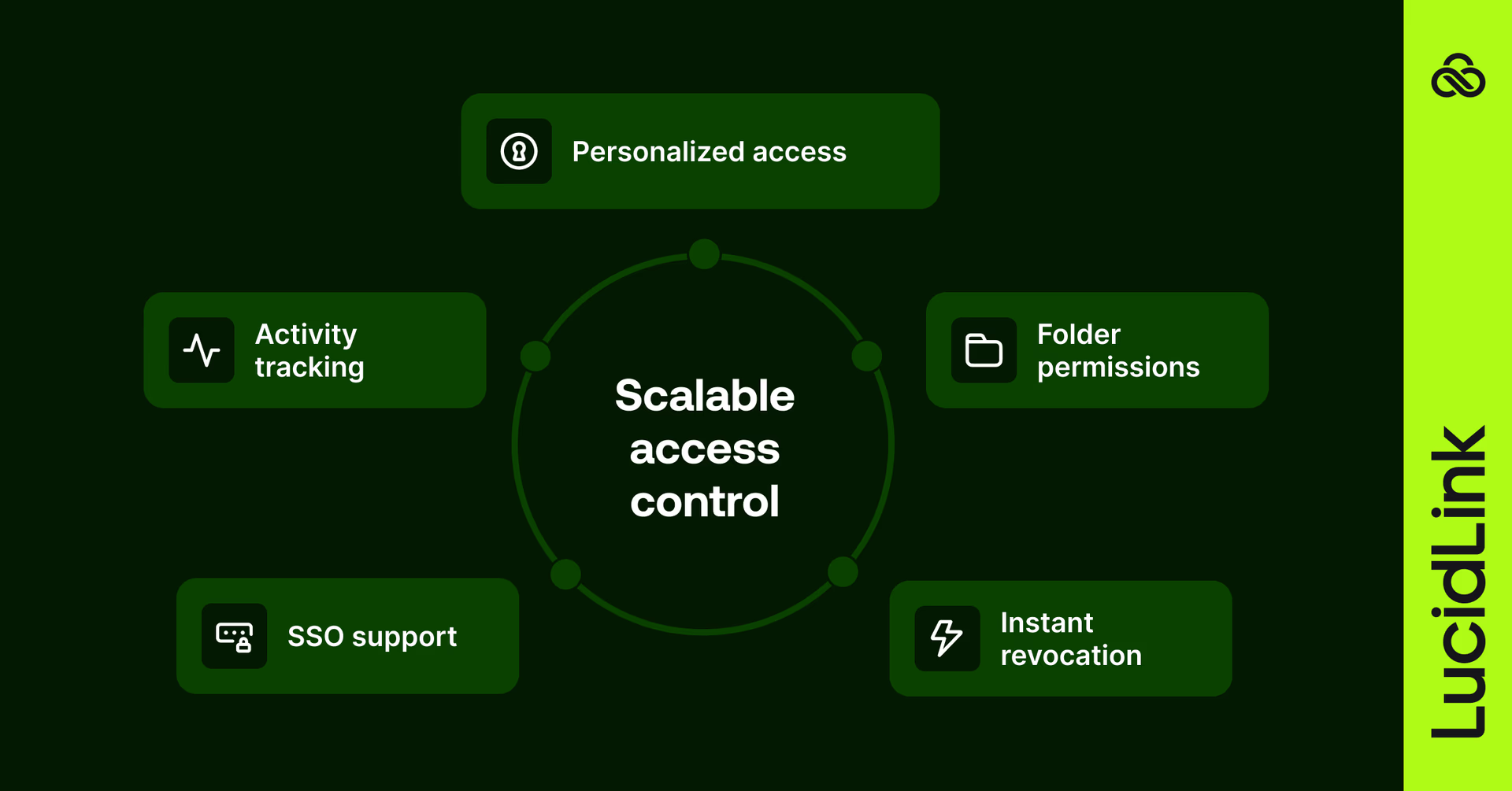
Security models are only as strong as the access controls built on top of them. Here's our approach.
User-level security
Each user is assigned a unique public-private key pair
Private keys are encrypted with user passwords using cryptographic key stretching, hardening them against brute-force attacks
Users can only decrypt folders they've been explicitly granted access to
Folder-level permissions
Permissions are managed at the folder level, aligning with how organizations structure projects and teams
Access can be granted as read-only or read-write per user or group
Changes apply immediately across all devices
Instant revocation
Remove a user's access and it happens in real time. There’s no waiting for sync cycles or cache clearing and no manual cleanup.
SSO integration
LucidLink integrates with a wide range of enterprise identity providers via SAML 2.0, including Okta, Azure AD, Google Workspace, OneLogin and others. SSO authentication applies across desktop, web and mobile, so the same identity policies cover every touchpoint of the workflow.
Organizations can enforce consistent authentication policies, eliminate orphaned accounts and tie LucidLink access directly to existing identity infrastructure. When an employee is offboarded through the identity provider, their LucidLink access is revoked automatically.
Audit logging
LucidLink's audit trail records file-level access events across your filespace: who accessed what, when and what they did. Logs are stored in a restricted directory accessible only to administrators.
This visibility extends into your existing security stack. "We can tie LucidLink back to our Microsoft security stack and see all the user logs,” Omer Mushawar, CTO, Torti Gallas + Partners.
Compliance certifications
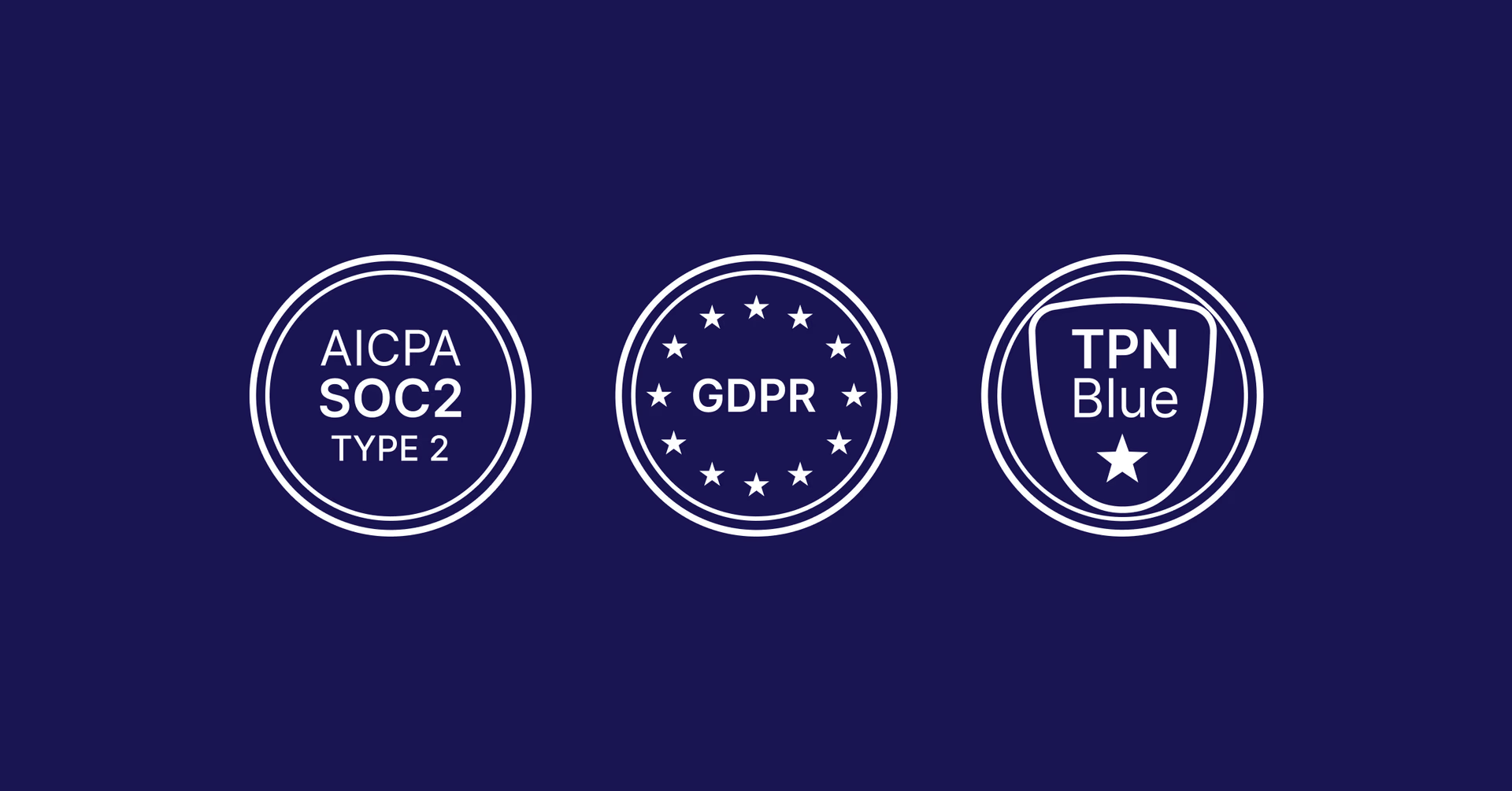
For organizations in regulated industries, security architecture needs to be verifiable, not just asserted. LucidLink meets these requirements through established compliance frameworks.
These certifications accelerate vendor security assessments and provide third-party validation of LucidLink's security controls, reducing the burden on IT and legal teams during procurement.
SOC 2 Type II: independent verification of security, availability, processing integrity, confidentiality and privacy controls across a defined audit period.
ISO 27001: the international standard for information security management systems, demonstrating a systematic approach to managing sensitive company and customer data.
GDPR: European data privacy compliance, including data sovereignty, user rights and breach notification requirements. Data residency is configurable, allowing organizations to keep data within specific geographic boundaries. For global organizations, this applies alongside broader international compliance standards.
MPAA TPN: Trusted Partner Network compliance for media and entertainment production security, covering content protection requirements for studios and broadcasters. Beyond certifications, LucidLink has been trusted by the world’s leading productions for over a decade and recognized with an Engineering, Science & Technology Emmy® Award.
What LucidLink’s architecture delivers in practice
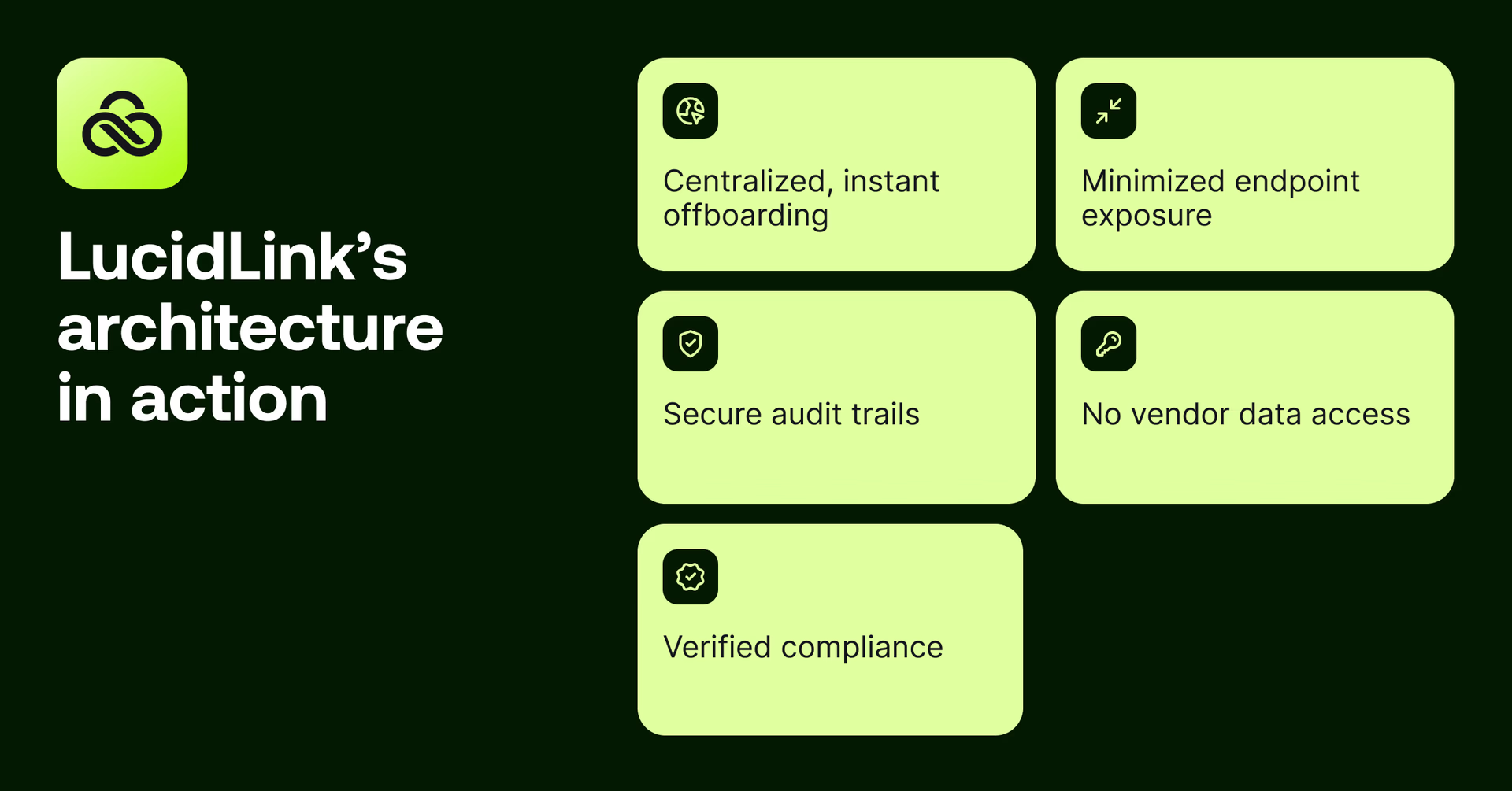
LucidLink’s file streaming architecture and security model produce specific operational outcomes for IT and security teams.
Offboarding is complete and centrally controlled: revoking access removes it entirely and immediately across devices, whether it’s a full-time employee in London, a contractor in LA or a freelancer on a personal device.
Endpoint exposure is reduced: files are not fully replicated across endpoints by design. A lost or stolen device does not expose full replicated datasets from the filespace.
Audit trails are complete: access events are logged at the file level and stored in a restricted directory that only administrators can access.
Vendor risk is reduced: LucidLink cannot access your data. Storage providers cannot access your data. The zero-knowledge model removes provider trust as a risk factor entirely.
Compliance documentation is available: SOC 2 Type II, GDPR and TPN certifications are maintained and available to support vendor assessments and internal audits.
Secure workflows without trade-offs
File security that slows teams down quickly stops being used. But when security infrastructure works correctly, it fades into the background.
The choice between security and ease of use exists because most platforms weren't designed to deliver both. LucidLink was.
LucidLink's architecture removes the trade-off at source. Teams get fast access to the files they need. IT gets verifiable control over who can see them, with zero-knowledge encryption, no residual data, instant access revocation and compliance certifications that hold up under audit.
Our zero-knowledge security model has been deployed and refined over more than a decade, protecting business-critical assets for global teams across regulated industries and enterprise IT worldwide.
Book some time with our experts to discuss your security requirements
Keep reading

Cloud storage
New research: what your storage bill doesn’t tell you
New research from Situation Publishing explores the hidden costs around file infrastructure, from egress and duplication to lost time and manual work.
14 October 2026, 4 mins read
Cloud storage
Introducing the new LucidLink MSP: one platform for your whole book
LucidLink MSP runs on the LucidLink Management Platform, giving MSPs centralized deployment management and pricing that scales with growth.
09 September 2026, 2 mins read

Product & news
Cloud storage
Beyond headline speeds: what cloud file streaming needs to succeed
Block-level streaming, smart prefetching and metadata coordination: here's the architecture behind how LucidLink performs on standard internet connections.
05 August 2026, 6 mins read
Join our newsletter
Get all our latest news and creative tips
Want the details? Read our privacy policy. Not loving our emails?
Unsubscribe anytime or drop us a note at support@lucidlink.com.